

 Add:No. 16 Xingye Road, Beijiao Town Industrial Park, Shunde District, Foshan City, Guangdong Province
 PHONE: +86 13509957538
 TEL: +86 0757-26131933
 Email: huayin_glass@163.com

Chinese


In a commercial freezer, the glass door rarely fails. What generates service calls is the accessory chain around it: a controller whose relay has welded shut after two years of defrost cycling, or an evaporator fan whose bearing noise exceeds the sales-floor ambience. For buyers who source freezer glass doors together with accessories, the controller and fan motor are the two components where written specifications decide whether the cabinet runs quietly for five years or gets replaced in eighteen months. This whitepaper sets out the parameters that matter, how they integrate with heated glass doors, and which incoming tests catch the defective units.
A display cabinet is a system: the door controls heat gain, the controller decides compressor duty, the fan decides temperature uniformity. When a cabinet "runs warm", the root cause is in this chain far more often than in the door glass. Buyers who consolidate door and accessories with one supplier get a matched set — gasket compression, hinge torque, controller setpoints and fan airflow specified against the same door geometry — instead of four vendors blaming each other across a warranty claim.
A digital temperature controller is specified by five parameter groups. Each one should be written into the purchase order, not left to the controller brand's defaults.
| Parameter | Typical spec | What goes wrong if ignored |
|---|---|---|
| Sensor type | NTC 2kΩ or 10kΩ, −40 to +60°C range | Mismatched sensor curve gives 2–3°C offset, compressor short-cycles |
| Relay rating | 16A / 250VAC resistive for compressor output | Undersized relay welds shut after defrost cycles, cabinet runs non-stop |
| Defrost mode | Time-based or demand defrost, 20–40 min cycle | Too-frequent defrost melts stock; too rare builds ice on evaporator |
| Alarm functions | High/low temp alarm, door-open delay 30–60 s, sensor fault | Missed door-open alarms double compressor duty in busy stores |
| Display and keys | Blue LED, panel-sealed keypad, IP54 front | Unsealed keys fail in washdown environments within months |
Two electrical details deserve explicit lines in the drawing: contactor drive for compressors above the relay rating, and a sensor position spec — the probe must sit at the evaporator return-air side, not in the door swing path, or every door opening reads as a temperature alarm.
Evaporator and circulation fans are specified by electrical, acoustic and environmental limits. The noise figure matters most on open-front display cabinets, where the fan is a metre from the shopper's ear.
| Parameter | Typical spec | What goes wrong if ignored |
|---|---|---|
| Voltage / frequency | 220–240V / 50Hz or 115V / 60Hz, ECM or shaded-pole | Wrong frequency shifts RPM 17%, airflow and noise move off design |
| Power and speed | 6–40W, 1,300–2,600 RPM per cabinet airflow design | Oversized fan dries produce; undersized loses temperature uniformity |
| Noise limit | ≤ 40 dB(A) at 1 m, ball-bearing or sleeve per duty | Sleeve bearings drone within a year on continuous-duty cabinets |
| Environmental | IP54 lead exit, −30 to +60°C, anti-condensation coating | Uncoated windings trip leakage breakers in humid cold rooms |
Blade specification belongs on the same drawing: diameter, pitch and material (PP or ABS) matched to the shroud, with a stated airflow in m³/h. A fan motor quoted without an airflow figure is a motor, not a solution.
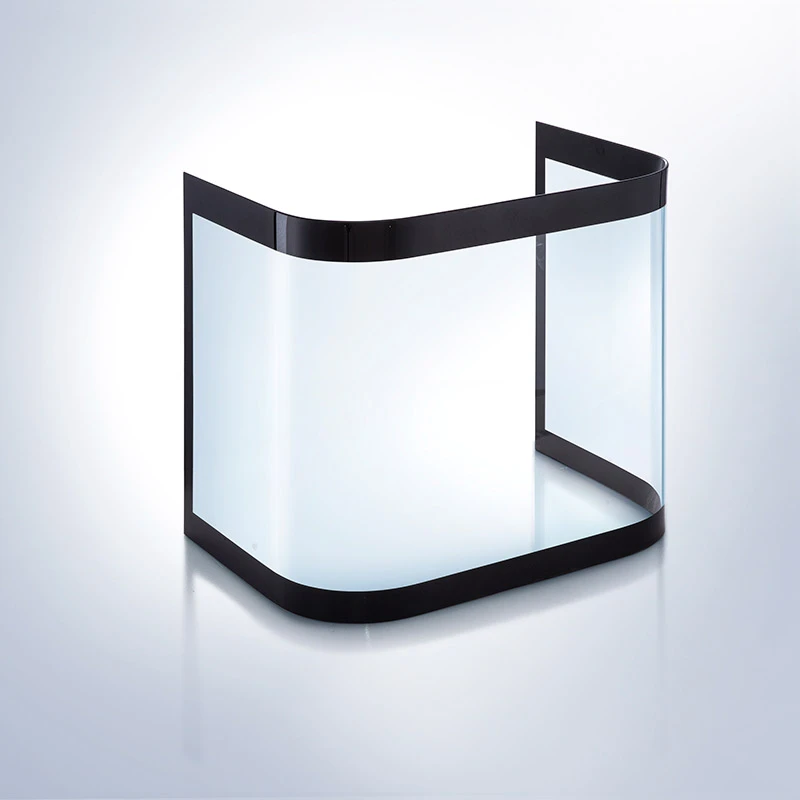
Where the door carries an anti-fog heated lite or an ITO panel, the controller gains a second output channel or a dedicated heater relay. Three integration rules prevent the common failures. Power budget: heater load, typically 60–150 W per door, must be added to the compressor circuit's sizing rather than tapped off the fan output. Interlock: the heater channel should follow compressor duty or a condensation sensor, not run 24/7 — permanent heating shortens busbar joint life and wastes energy. Wiring: heater circuits route through the hinge-side cable duct with strain relief, and the controller's sensor-fault alarm must also cut heater power, since a failed sensor with a live heater is a thermal hazard.
Accessory sets ship to markets with different electrical standards, and the controller's transformer or SMPS must match. North and Central America run 115V/60Hz; most of Europe, the Middle East and Africa run 220–240V/50Hz; some Latin American markets mix both within one country. Fan motors are ordered by voltage and frequency as a pair — a 50Hz motor on 60Hz supply turns 20% faster, raising noise and current. Certification expectations differ too: CE marking for Europe, ETL or UL listing where the buyer's market requires it, and the marking must appear on the accessory itself, not only the carton.
Four tests at incoming inspection catch the units that fail in the field. Hi-pot test at 1,500 VAC for one second verifies insulation, the test that screens out the condensation-tripped motors. Ageing run: 48 hours of continuous cycling through defrost cycles, verifying relay contact resistance stays stable and the display does not flicker. Noise measurement at 1 m against the written dB(A) limit, with the cabinet running. Functional walk-through: every alarm — high temp, low temp, door open, sensor fault — triggered deliberately and recorded. A batch that skips the ageing run has outsourced its failure discovery to the retailer's first summer.
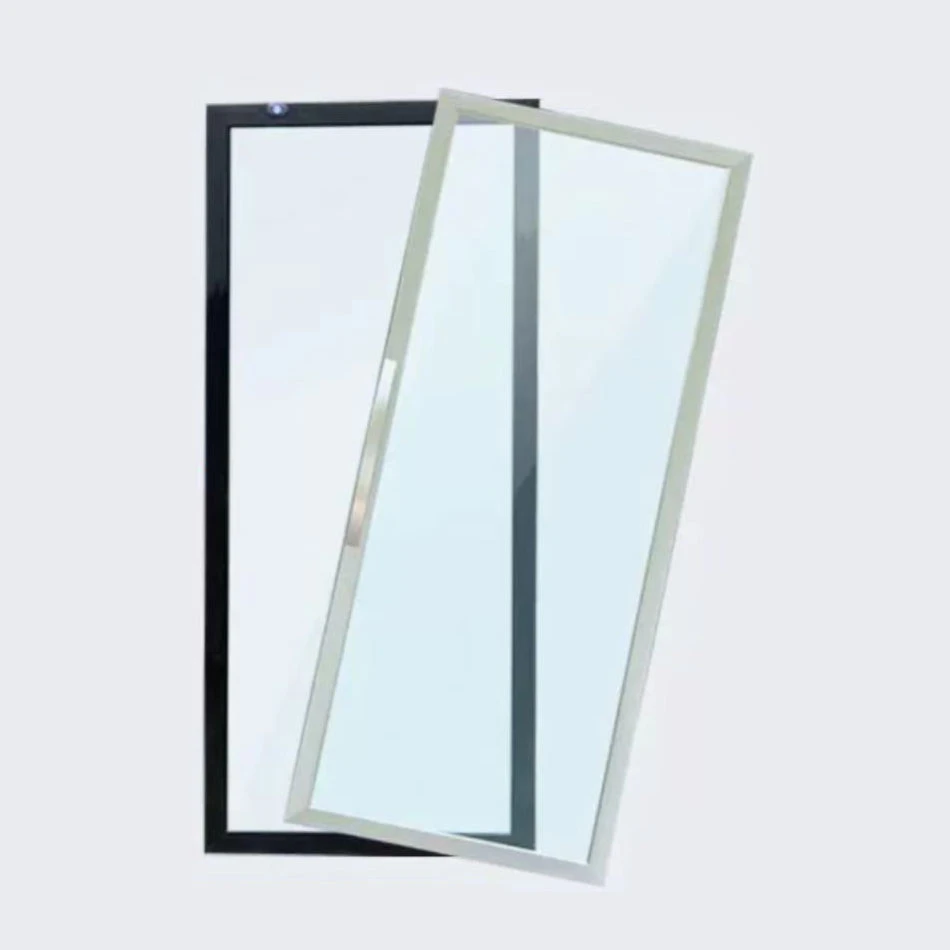
Accessory sets fail in transit more than glass does, because they ship loose. Controllers and motors pack in individual boxes with foam, then into the door crates at 2% spare rate for controllers and 3% for fan motors — the two parts a service depot replaces most. Documentation travels with each set: wiring diagram keyed to the cabinet model, controller parameter sheet with factory defaults, and the sensor-position drawing. Installers wire from diagrams, not from guesswork; a missing diagram converts a five-minute fix into a whole-day site visit.
Huayin Glass Solutions supplies matched accessory sets — controllers, fan motors, hinges, gaskets and LED lighting — alongside custom freezer glass doors from its Foshan plant, consolidating the cabinet's critical chain with one accountable supplier since 2002.
| Term | Definition |
|---|---|
| NTC sensor | Negative temperature coefficient thermistor whose resistance falls as temperature rises; the controller's temperature input |
| Demand defrost | Defrost triggered by measured ice load or evaporator temperature rather than a fixed clock |
| ECM motor | Electronically commutated motor; variable speed, higher efficiency and lower noise than shaded-pole designs |
| Hi-pot test | High-potential insulation test verifying no leakage between live parts and chassis |
| Ageing run | Continuous-cycle factory test that exposes early-life relay and display failures before shipment |
Specifying a new cabinet platform or consolidating your accessory supply? Send the cabinet model, door configuration and destination voltage to our engineering team for a matched accessory quote, or browse the full accessories series first.
Further reading: Accessories Series · Refrigerator Glass Doors · Commercial Supermarket Freezer Glass · All Products · ITO Glass vs Defogging Coating
Add:No. 16 Xingye Road, Beijiao Town Industrial Park, Shunde District, Foshan City, Guangdong Province
PHONE: +86 13509957538
TEL: +86 0757-26131933
Email: huayin_glass@163.com

© 2026 Huayin Glass Solutions All Rights Reserved.


