


 Add:No. 16 Xingye Road, Beijiao Town Industrial Park, Shunde District, Foshan City, Guangdong Province
 PHONE: +86 13509957538
 TEL: +86 0757-26131933
 Email: huayin_glass@163.com

Chinese


A wall-hung boiler is sold on the wall of a kitchen, next to a cabinet and a worktop, at eye level. The front panel is the product. Buyers see it before they read the efficiency rating, and they compare it side by side with the unit next to it in a showroom. When four panel suppliers feed one assembly plant, those panels meet on the same wall — and the differences that were invisible in isolation become the reason a brand consolidates its supply base.
This case follows a European heating brand through a fourteen-month consolidation: four panel suppliers reduced to one, three panel sizes expanded to eleven, and a run rate that reached 400,000 wall-hung boiler glass panels a year. The interesting part is not the volume. It is the four specifications that decided whether the ramp worked.
The brand's assembly plant received glass panels from four suppliers across three countries. Each supplier passed its own incoming inspection. Yet in the showroom, panels mounted on adjacent boilers read as different colours: one slightly brown, one slightly blue, one visibly lighter under warm retail lighting. Service teams also reported two failures that never appeared in any inspection report.
Colour drift between batches. Black ceramic ink is the hardest colour to hold. Pigment concentration, print thickness and the iron content of the substrate all shift the final reading, and each supplier had its own ink batch, its own screen tension and its own definition of acceptable.
Cracks starting at the knob holes. Panels arrived intact and cracked in the field, usually within the first heating season. The origin was consistently a hole edge: too close to the panel edge, or cut with a rough wall that concentrated stress under the knob's clamping force.
Gasket lifting at the flue side. A foam gasket bonded to the printed surface began to lift after months of cycling between cold transport and a hot flue-side environment, letting dust and moisture behind the panel.
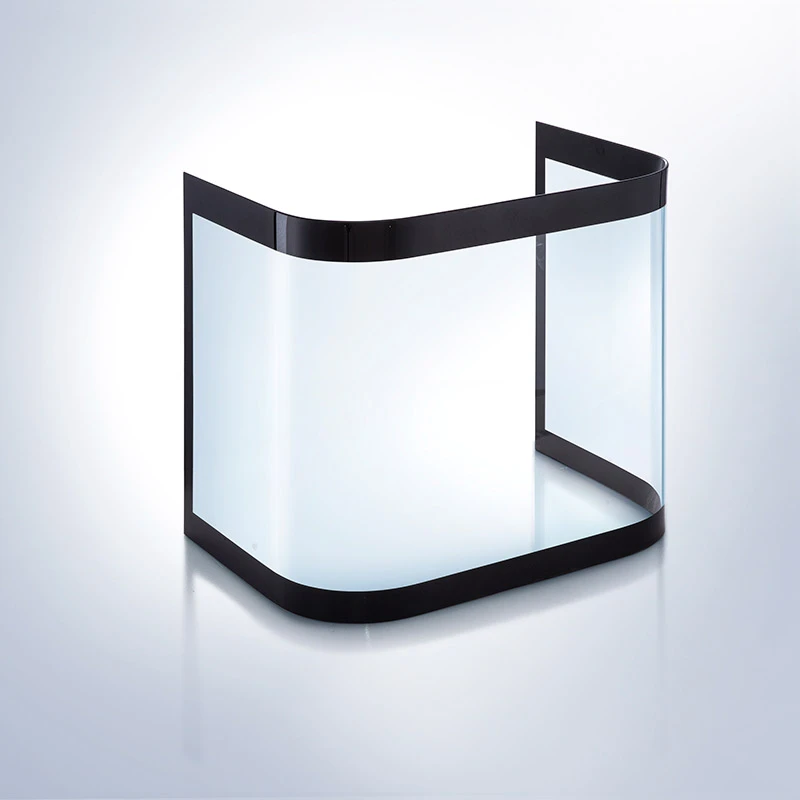
The engineering team converted each complaint into a number that could be measured on an incoming lot. The table below is the version that went into the supply agreement, and it is a useful template for any home appliance glass panel program with more than one SKU.
| Requirement | Target | Why it mattered |
|---|---|---|
| Substrate | 4 mm low-iron, temperable, neutral tint | Standard float glass shifts black toward green under retail lighting |
| Print colour | ΔE ≤ 1.5 at D65, batch to batch, same ink batch preferred | Panels are compared side by side on a showroom wall |
| Hole position | ±0.3 mm, edge distance ≥ 2× thickness, internal corner R2 | Knob and pipe holes were the first crack origin in the field |
| Flatness | 0.3% of diagonal, no local bow at the display window | Light leak and uneven gasket compression around the window |
| Thermal cycling | -20°C to +90°C, 200 cycles, no delamination or print lift | Cold transport plus a hot flue-side zone in service |
| Impact | 227 g steel ball, 1 m drop, no fracture | Handling and installation knocks on a 4 mm panel |
| Gasket adhesion | No lifting after cycling; 90° peel recorded per lot | Foam gasket is bonded directly to the printed surface |
Nothing in the final build was exotic. What changed was the order of operations and the discipline around four details.
Ceramic ink is printed on the annealed sheet and fired during tempering at roughly 700°C, which fuses the pigment into the glass surface. Printing after tempering — with organic ink or film — cannot survive the flue-side temperature and will not pass a 200-cycle test. Every panel in this program was printed first, then tempered, then inspected.
The brand initially specified 3 mm to save weight and cost. Across a 400 mm span, however, 3 mm deflects enough that the gasket no longer compresses evenly at the centre of the panel, and the display window shows a light gap. Moving to 4 mm low-iron removed the deflection without changing the cabinet interface. Thickness was chosen for stiffness, not for strength.
Three fixes were applied to the drawing rather than to the process. Edge distance on the two lower knob holes increased to twice the thickness. The internal corners of the rectangular cut-out were rounded to R2. Position tolerance was tightened to ±0.3 mm and drilled on CNC rather than on a manual drill press, because a rough hole wall acts as a notch exactly where the knob clamps.
Holding ΔE ≤ 1.5 on black required three controls working together: one ink batch per production campaign, print thickness checked by weight per square metre rather than by eye, and a fired sample retained from each lot as the colour reference for the next. Retaining a fired physical standard matters more than any digital value, because the ink changes shade after firing.
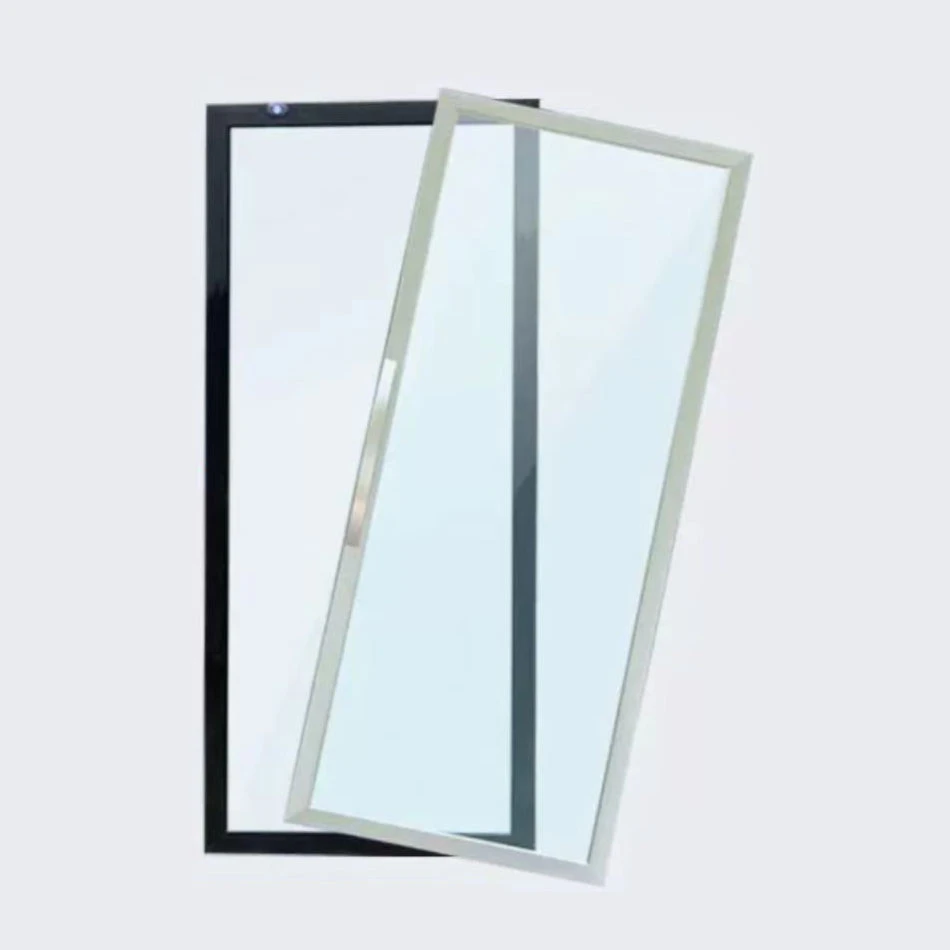
Sampling covered eight panels across the three original sizes. Each was measured on colour, hole position, flatness and gasket adhesion, then cycled and re-measured. Two findings changed the program before mass production started.
Registration drift on the display window. The printed border around the window moved by up to 0.4 mm over a long run as screen tension relaxed, which showed as an uneven black frame. The fix was a mid-run registration check every 200 pieces plus a screens-and-mesh replacement interval written into the process sheet.
Gasket adhesion after cycling. The first adhesive passed the initial peel test but lifted at the flue-side edge after cycling. A different adhesive, applied after a plasma pre-treatment of the printed surface, held through the full 200 cycles. Neither issue would have been visible on a single uncycled sample.
The first three production lots were inspected at 100%, then released to AQL sampling once the colour and hole data stayed inside tolerance for three consecutive lots. That gate is worth keeping: it converts a supplier's confidence into evidence before volume arrives.
By the end of the ramp the program was running at 400,000 panels a year across eleven SKUs on a single line. The outcomes below are reported as direction rather than absolute figures, because they mix inspection data with field returns.
| Metric | Direction of change |
|---|---|
| Colour rejects at incoming inspection | Fell sharply once one ink batch per campaign was enforced |
| Field cracks originating at knob holes | Largely eliminated by edge distance and CNC hole quality |
| Gasket lifting at the flue side | No longer a recurring service item after the adhesive change |
| Flatness and window light leak | Stopped being a topic in assembly line feedback |
| Supplier management load | Four colour standards reduced to one |
| Changeover cost between SKUs | Lower, because screens and ink campaigns were planned together |
Q: Is 4 mm always better than 3 mm for an appliance panel?
A: No. Thickness here was chosen for stiffness across a 400 mm span, so that the gasket compresses evenly and the window shows no light gap. For a small control panel with a continuous support frame, 3 mm tempered glass is a rational and cheaper choice. Decide from the span and the frame, not from a general preference for thicker glass.
Q: Why does black cause so much trouble compared with other colours?
A: Black has the least tolerance for variation. Small shifts in pigment load or print thickness read as brown or blue, and any dust, pinhole or roller mark shows up against the darkest background. Two practical controls help: retain a fired sample from each lot as the physical reference, and keep one ink batch per campaign instead of changing ink mid-run.
The wider lesson is that a multi-SKU panel program succeeds on the drawing, not on the line. Hole edge distance, corner radius, flatness and colour tolerance all have to be written before the first sample is cut, because none of them can be inspected into a finished panel. Huayin Glass manufacturing runs cutting, CNC machining, ceramic printing, tempering and gasket assembly under one roof, which is what allows a panel, its holes and its bonded gasket to be produced against a single drawing and a single colour standard.
Ramping an appliance panel program? Send the panel drawing, annual volume, SKU count and target market to our engineering team for a free DFM review and sample quotation; the same approach applies to induction cooker glass panels and water heater glass panels.
Further reading: Wall-hung boiler glass panel · Client cases · ITO glass vs defogging coating
Add:No. 16 Xingye Road, Beijiao Town Industrial Park, Shunde District, Foshan City, Guangdong Province
PHONE: +86 13509957538
TEL: +86 0757-26131933
Email: huayin_glass@163.com

© 2026 Huayin Glass Solutions All Rights Reserved.


