


 Add:No. 16 Xingye Road, Beijiao Town Industrial Park, Shunde District, Foshan City, Guangdong Province
 PHONE: +86 13509957538
 TEL: +86 0757-26131933
 Email: huayin_glass@163.com

Chinese


Every custom glass door programme begins with one commercial decision: hand the factory your drawing, or start from a design the factory already builds. Both routes ship a compliant door. They differ in who carries the engineering, who owns what when the programme ends, and how quickly the first container leaves. This checklist sets out the trade-offs in the order they affect a purchase order.
The label on the quotation matters less than the answer to one question: whose drawing governs production? Under OEM, yours does. The factory builds to your geometry, your tolerance stack, your print file and your glass build-up, and every deviation is a non-conformance. Under ODM, the factory's existing platform governs, and your brand is applied on top of it. Private label sits between the two, adding logo, colour and packaging to a catalogue door without touching its structure.
OEM is the right route when the door is part of the product's differentiation: an unusual radius, a specific IGU build-up, a lighting pattern that no catalogue covers. It is the wrong route when you need 300 doors quickly and the geometry is ordinary. ODM is the right route when speed to shelf beats uniqueness, and the door is a component rather than the selling proposition.
Check glass deep processing capability before choosing either model. A factory that cuts, tempers, prints and assembles inline can hold an OEM tolerance stack; one that only assembles bought-in parts cannot, whatever the model name on the contract.
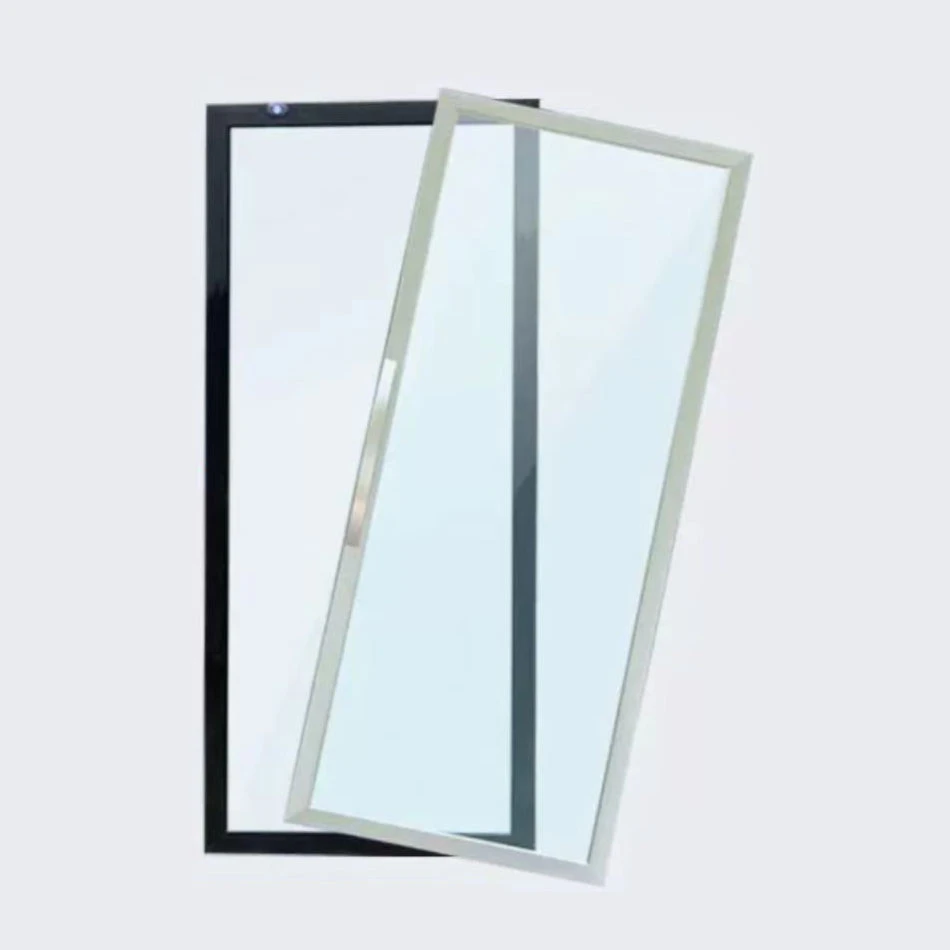
Run your programme through the rows below before requesting a quotation. The model that wins on unit price is rarely the model that wins on total cost once engineering and change management are counted.
| Criterion | OEM | ODM / private label |
|---|---|---|
| Drawing ownership | Buyer; factory reviews for manufacturability | Factory; buyer specifies branding only |
| Tooling and NRE | Paid by buyer, typically amortised into unit price | Borne by factory, spread across all customers |
| MOQ driver | Set-up time, glass yield, print screens, packaging | Platform run length; often a fraction of OEM |
| First-article lead time | 5-10 working days for samples, plus tooling | 3-5 working days, samples drawn from stock build |
| Differentiation | High; the geometry is yours alone | Low; the same platform is sold to your competitors |
| Change control | Engineering change note per revision, fully traceable | Limited to print, colour and packaging |
| Best fit | Brand-defining doors, unusual curvature, integrated lighting | Fast market entry, private-label ranges, replacement doors |
OEM carries four costs that ODM hides inside the unit price: drawing review and DFM feedback, tooling and print screens, sample rounds, and the engineering time to close a tolerance stack. None of them appear as a line item on an ODM quotation, because the factory has already absorbed them across a platform it sells many times over.
The honest comparison is total cost to first saleable container, not unit price. An OEM programme with two sample rounds, a print screen set and a 500-piece first order can land 10-20% above ODM per unit and still be cheaper over three years, because the design does not have to be replaced once the category matures. Conversely, ODM wins outright when the door will be superseded within eighteen months.
Two items belong in the contract whichever model you choose: who owns the tooling and print files, and whether you hold exclusivity on the platform for your market. Both are cheap to write and expensive to argue about later.
ODM failures are rarely quality failures. The door arrives as specified and still creates problems, because the specification was never yours. Four patterns account for most of them.
Silent substitution. The platform's gasket, spacer or LED module changes when the factory's supplier changes, and your approved sample no longer matches production. Fix it by naming every component in an approved bill of materials, not by approving a photograph.
Tolerance inheritance. An ODM door carries the platform's tolerance stack, including the areas the original customer designed around. If your cabinet frame is tighter than that stack, the door will not seat. Ask for the platform's actual numbers rather than its nominal drawing.
Second-source risk. The same door is sold to three competitors with different logos. Nothing is wrong with that commercially, but it removes the door as a reason to choose your cabinet. Reserve ODM for ranges where the door is not the argument.
Spares discontinuity. Platforms are retired. When they are, gaskets and hinges for your installed base disappear with them. Negotiate a spares commitment in years, and confirm the hardware is from the standard accessories series rather than a platform-only moulding.
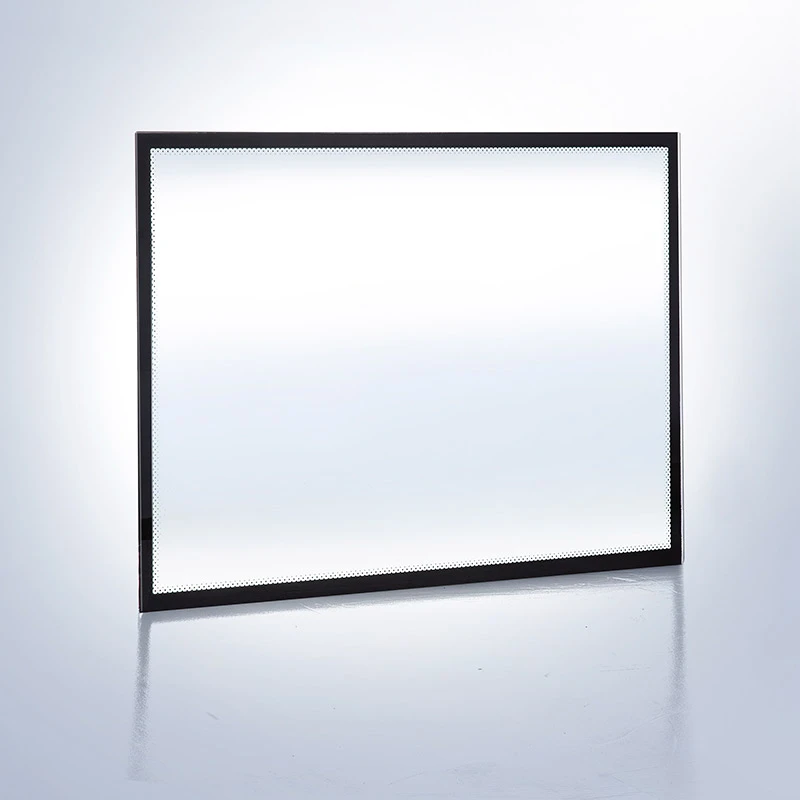
Comparing an OEM quotation against an ODM quotation is comparing two different scopes. Normalise both to landed cost per door at the same volume, including tooling, samples, freight and the engineering hours your team will spend on drawings.
If the contract does not say who owns the mould, the screen set and the print files, the practical answer is the factory. That becomes visible only when you want to move the programme. Write the clause at PO stage, when it costs nothing.
Even a catalogue door needs a written build-up: glass structure, coating position, gasket grade, lighting voltage, packing method. On refrigerator glass doors the difference between two ODM offers is almost always in these five lines.
Need a manufacturability review before you choose a model? Send the drawing, target volume and destination market to Huayin Glass Solutions — our engineers return a DFM report and an OEM or ODM quotation within 24 hours, covering freezer glass and wine cooler cabinet glass builds.
Further reading: Product overview · Featured projects · ITO vs defogging coating comparison
Add:No. 16 Xingye Road, Beijiao Town Industrial Park, Shunde District, Foshan City, Guangdong Province
PHONE: +86 13509957538
TEL: +86 0757-26131933
Email: huayin_glass@163.com

© 2026 Huayin Glass Solutions All Rights Reserved.


