


 Add:No. 16 Xingye Road, Beijiao Town Industrial Park, Shunde District, Foshan City, Guangdong Province
 PHONE: +86 13509957538
 TEL: +86 0757-26131933
 Email: huayin_glass@163.com

Chinese


Tempered glass almost never breaks without a reason — but when it does, it breaks completely. For a retail chain operating freezer aisles in some of the hottest retail environments on earth, one shattered freezer glass door means an aisle shutdown, a cleanup, and a replacement lead time measured in weeks. This case study follows a Gulf-region chain that suffered a cluster of spontaneous breakages in its freezer doors, and rebuilt its specification around heat-soak tested tempered glass.
Over an eighteen-month period, the chain recorded seven spontaneous breakages across freezer doors installed in stores with peak summer ambient temperatures above 45°C. No impact events could be identified on CCTV for any of them. The doors were standard tempered insulated units; the failures followed the classic pattern of nickel sulfide (NiS) inclusion breakage — a small phase-change inclusion inside the glass expands over time, and once a critical stress point is reached, the panel disintegrates into granular fragments.
Tempered glass is safe when it breaks, but in a food retail environment the failure mode itself is the problem: glass fragments inside a freezer aisle trigger stock disposal, deep cleaning, and door replacement. The chain's engineering team concluded that reducing the probability of spontaneous breakage had to become a formal purchase requirement, not an assumption.
The team converted the failure data into four verifiable requirements and issued them with the tender documents.
| Requirement | Target | Reason |
|---|---|---|
| Fragmentation | EN 12150 compliant, report per batch | Baseline safety for tempered panes |
| Heat-soak test | EN 14179, 290°C hold, certificates included | Screen out NiS-prone panels |
| Thermal stress margin | Edge workmanship: polished edges, no shell chips | Edge defects drive thermal breakage |
| Traceability | Batch numbers linked to furnace records | Any future incident can be investigated |
After reviewing three suppliers, the chain awarded the order for a fully tempered, heat-soak tested door assembly with Low-E insulated glazing.
Heat soak treatment places finished tempered panels in an oven at 290°C and holds them long enough for panels containing critical NiS inclusions to break inside the factory instead of inside the store. The process cannot make glass unbreakable, but it removes the panels most likely to fail in service — the same logic as a stress screening in electronics manufacturing.
The heat-soak requirement was added to the existing Low-E insulated commercial freezer glass build — tempered outer pane, Low-E coating on surface 3, argon-filled cavity, warm-edge spacer. The chain deliberately avoided redesigning the door around the new requirement, which kept tooling costs at zero and allowed stores to swap doors without touching frames or gaskets.
Thermal breakage is not only about NiS. Edge damage from poor grinding creates micro-cracks that grow under the daily thermal cycling of a freezer door. The specification therefore required machine-polished edges with a written allowance for shell chips and edge shelling — a detail most buyers leave out and most factories never volunteer.
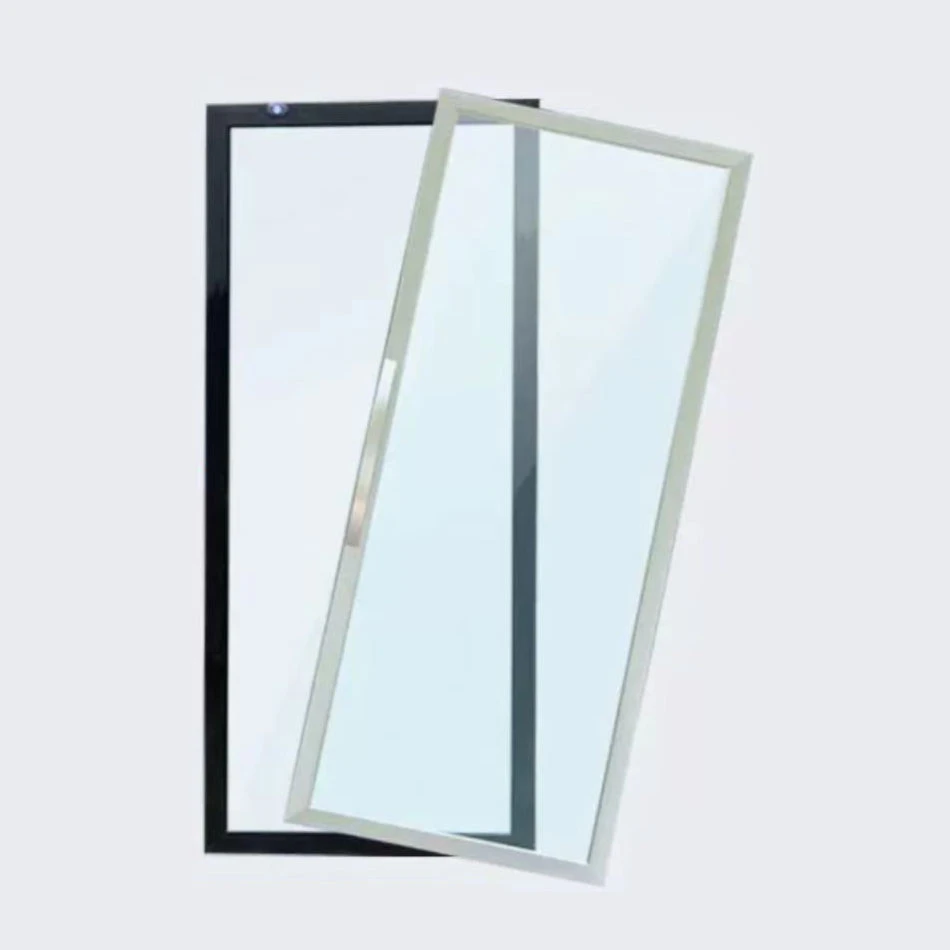
Each production batch was validated against three checkpoints before shipment: fragmentation testing per EN 12150 on sample panes, heat-soak certificates per EN 14179 covering the full quantity, and a first-article dimensional check against the existing frame profile. One early batch was rejected at the edge-inspection stage after shell chips were found on a corner sample; the grinding parameters were corrected before mass production resumed. The batch-number traceability requirement turned out to be the cheapest clause in the contract and the most valuable when a store later queried a pane's origin.
All 340 doors were rolled out across the chain over a seven-month cycle, store by store, without closing a single freezer aisle overnight. The directional outcomes after two full summer seasons:
| Metric | Direction of change |
|---|---|
| Spontaneous breakage events | Zero recorded since rollout |
| Aisle downtime per incident | Eliminated as a category |
| Condensation complaints | Unchanged (already solved by existing glazing) |
| Door fit to existing frames | Direct swap, no cabinet modification |

Q: Is heat-soak testing required for every freezer glass door?
A: Not always. It is a risk-based decision. Hot climates, tall doors, and stores where a single failure causes major disruption justify the additional processing and cost; mild-climate installations with easy access may accept standard tempered glass with good edge quality.
Q: What documents should a buyer actually receive?
A: Three items minimum — EN 12150 fragmentation reports per batch, EN 14179 heat-soak certificates covering the delivered quantity, and furnace batch records that link pane serial numbers to production runs. A supplier who resists providing these is telling you something.
The broader lesson: spontaneous breakage is a procurement variable you can manage. Write the standard into the specification, demand batch-linked certificates, and audit edge quality before the order ships. Huayin Glass manufacturing capability covers forced-convection flat and curved tempering furnaces with batch traceability from CNC cutting to insulated glass assembly.
Planning a freezer door program with a safety-glass requirement? Send your door schedule and target market to our engineering team for a free DFM assessment and sample quotation.
Further reading: Curved tempered glass · Freezer glass series · ITO glass vs defogging coating
Add:No. 16 Xingye Road, Beijiao Town Industrial Park, Shunde District, Foshan City, Guangdong Province
PHONE: +86 13509957538
TEL: +86 0757-26131933
Email: huayin_glass@163.com

© 2026 Huayin Glass Solutions All Rights Reserved.


