


 Add:No. 16 Xingye Road, Beijiao Town Industrial Park, Shunde District, Foshan City, Guangdong Province
 PHONE: +86 13509957538
 TEL: +86 0757-26131933
 Email: huayin_glass@163.com

Chinese


A custom glass door is three products in one shipment: a safety-glazed panel, an electrical assembly when it is heated or lit, and a food-contact surface when it closes a display cabinet. Compliance gaps do not surface at quotation stage — they surface at customs, at a retailer's supplier audit, or after the first breakage claim. Below are the six checks that decide whether your order clears every one of those gates.
Key Takeaways
Tempered glass is a safety glazing only when it is certified to the standard of the destination market: EN 12150 for the EU and UK, ANSI Z97.1 and 16 CFR 1201 for the United States, AS/NZS 2208 for Australia and New Zealand, and CCC for domestic China sales. A refrigerator glass door without a permanent mark is treated as ordinary annealed glass in an audit, regardless of how it was processed.
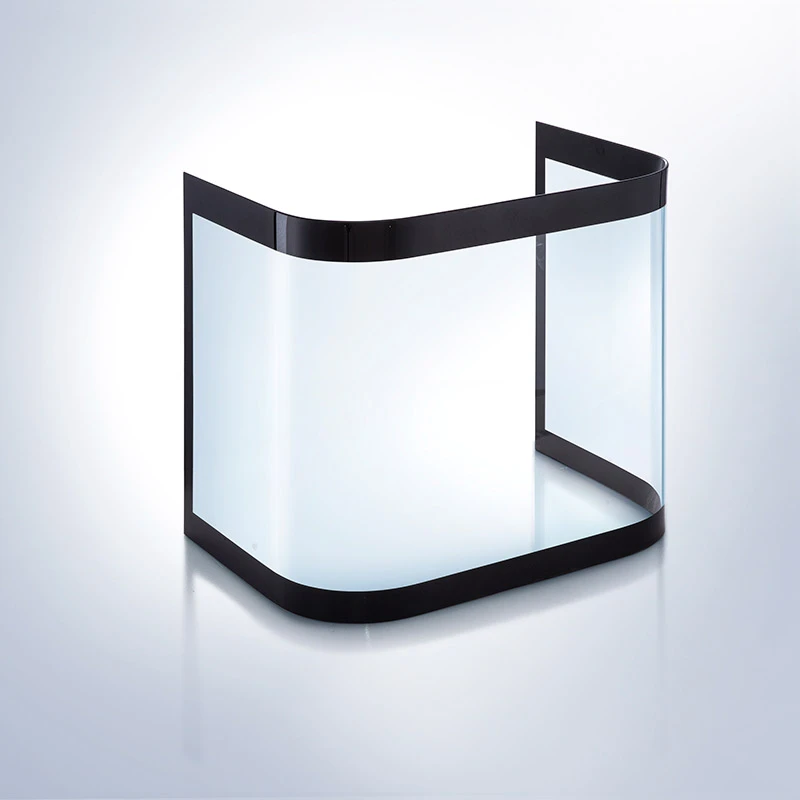
Ask for two documents rather than one: the fragmentation test record (particle count inside a 50 × 50 mm square) and the heat-soak test record that screens out nickel sulphide inclusions. Heat soak matters more on curved tempered glass, where bending adds residual stress variation across the arc and spontaneous breakage risk rises with it.
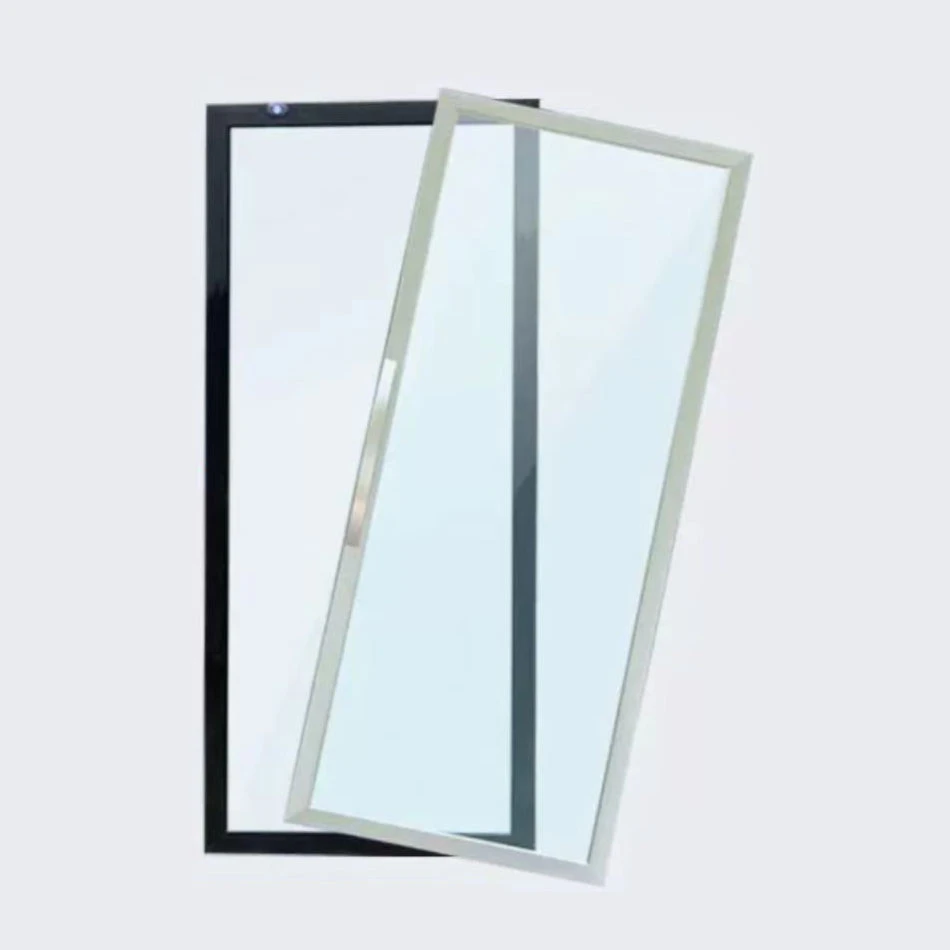
The moment a door carries an ITO heating film, a busbar, a controller or an LED strip, it stops being passive glazing and becomes an electrical assembly. For the EU and UK that means Low Voltage Directive 2014/35/EU and EMC Directive 2014/30/EU, evidenced by a CE or UKCA Declaration of Conformity. For North America it means a UL or ETL listing against the relevant appliance standard, commonly UL 471 for commercial refrigerators or UL 60335-2-24 depending on how the cabinet is classified.
Decide in writing who holds which approval. Factories normally certify the door as a component; the cabinet maker certifies the finished unit. If both sides assume the other covers it, the door arrives at the retailer with no listing at all — a failure that cannot be fixed without returning the goods.
Also fix the ingress protection rating for washdown areas, the cable gland type and the connector position, all in the same drawing. Wiring that exits where the frame cannot accept it is the most common cause of a rework round trip.
Any surface that can touch product — magnetic door gaskets, PVC profiles, shelf clips, sealant beads — falls under food-contact rules. In the United States that is FDA 21 CFR 177.2600 for rubber articles; in the EU it is Regulation 1935/2004 with 10/2011 for plastics, supported by a migration test report rather than a statement of composition alone.
Request the compound datasheet and the food-contact declaration together. A gasket quoted as "food grade PVC" without a compound name and a migration result is unverifiable, and it is the item most often silently substituted between sample and mass production.
RoHS 2011/65/EU applies to the electrical parts of a heated door — controller, wiring, LED module — and is checked through the BOM, not the glass. REACH requires an SVHC declaration above 0.1% by weight per article, and California Proposition 65 warnings are a separate US requirement that catches many suppliers by surprise.
Packaging compliance is where shipments actually get held. Wooden crates entering the EU, US, Australia and most of Asia need ISPM 15 heat treatment with a visible IPPC stamp; plastic wraps and foam fall under national packaging rules and, in the EU, under the packaging waste regulation. A compliant door in a non-compliant crate is still a non-compliant delivery.
Build one folder per order and verify it against this matrix before the deposit is released. The red-flag column is what to reject on, not what to negotiate over.
| Document | What it proves | Red flag |
|---|---|---|
| Glazing test report | Fragmentation and heat-soak results to EN 12150 / ANSI Z97.1 | Report from a different glass thickness |
| CE / UKCA DoC or ETL listing | Electrical assembly approved for the destination market | Certificate naming the cabinet, not the door |
| Food-contact declaration | Gasket and sealant compliance to FDA or EU 1935/2004 | "Food grade" with no compound name |
| RoHS and REACH statements | Restricted substances screened on the electrical BOM | One blanket statement for all models |
| Packing declaration | ISPM 15 treated crates, IPPC stamp visible | Untreated timber or reused crates |
Product construction options that sit behind these documents are listed on the freezer glass and products pages.
A certificate that names a different model, thickness or voltage is worth nothing at the border. Cross-check the model reference on every document against the drawing you approved.
Decide at PO stage which party certifies the finished assembly. Written allocation of responsibility takes one email; retrofitting a listing takes months.
Ask for a live video walkthrough of the tempering furnace, the insulated glass line and the electrical assembly bench, with nameplates visible. It is the fastest way to confirm the certificate belongs to the factory you are paying. Capability details are on the manufacturing page.
Need the document pack checked before you place a PO? Send drawings and destination market to Huayin Glass Solutions — our engineers return a DFM review and OEM quotation within 24 hours.
Further reading: Accessories series · Thermally bent glass · Clients · ITO vs defogging coating
Add:No. 16 Xingye Road, Beijiao Town Industrial Park, Shunde District, Foshan City, Guangdong Province
PHONE: +86 13509957538
TEL: +86 0757-26131933
Email: huayin_glass@163.com

© 2026 Huayin Glass Solutions All Rights Reserved.


