


 Add:No. 16 Xingye Road, Beijiao Town Industrial Park, Shunde District, Foshan City, Guangdong Province
 PHONE: +86 13509957538
 TEL: +86 0757-26131933
 Email: huayin_glass@163.com

Chinese


Most problems importers face with custom freezer glass doors from China do not come from the glass itself. They come from the space around the order: a trade term that left the wrong party holding the risk, a MOQ quoted for a catalog product instead of a custom one, or a lead-time promise that never accounted for sampling and sea freight. This guide walks through the four levers that decide whether an export order lands on schedule — trade terms, MOQ, lead time and packaging — and what to verify before you sign.
Three failure points appear again and again in door and glass export projects. First, trade terms chosen by habit: buyers who have always bought FOB sometimes accept EXW quotes without noticing they now own customs clearance in a country where their agent has no presence. Second, MOQ understood as a pricing trick rather than a production reality — for custom refrigerator glass doors, tooling, edgework and tempering batches all carry fixed costs that small runs cannot absorb. Third, lead time quoted as a single number, hiding the sampling and shipping stages where most delays actually happen.
None of these are manufacturing problems. All of them are contract problems, and they are cheapest to fix before the purchase order is signed.
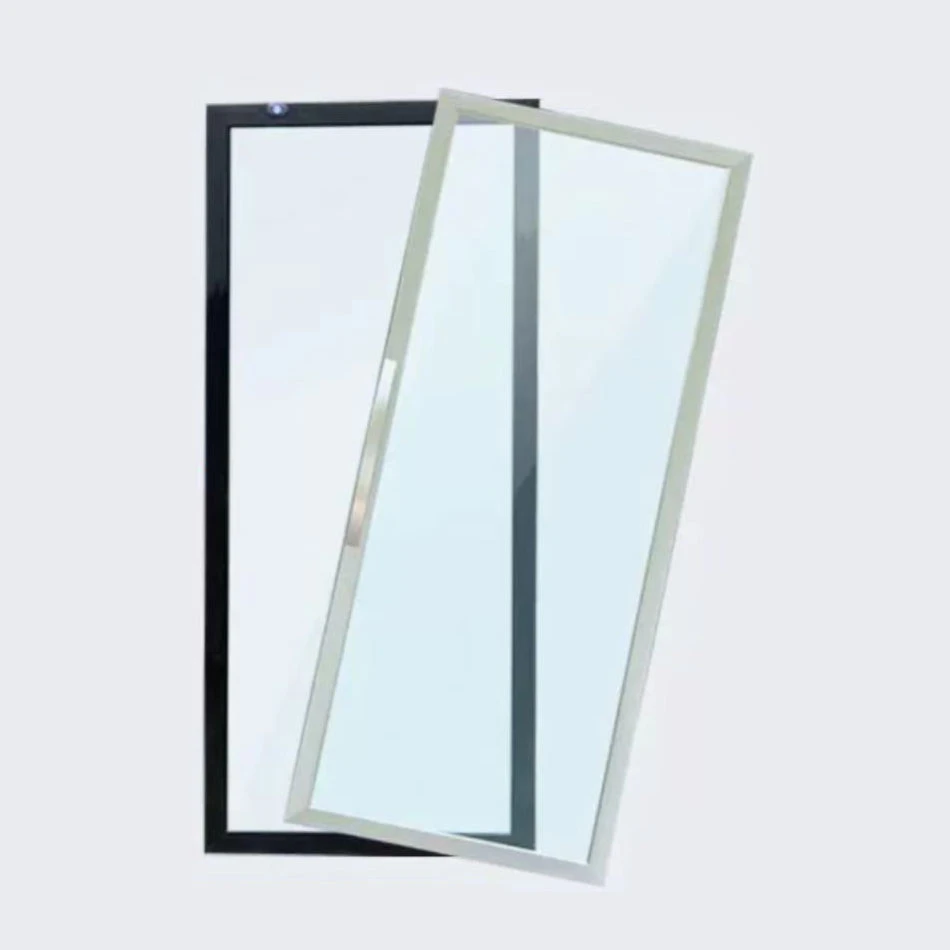
The trade term determines who books freight, who insures, and where risk transfers. For glass — heavy, fragile, and sensitive to handling — the choice matters more than for most goods.
| Term | Buyer handles | Watch-outs for glass orders |
|---|---|---|
| EXW | All transport, export clearance, insurance | Only suitable if you have a reliable China-side forwarder |
| FOB | Ocean freight and insurance from the Chinese port | Most common for repeat importers; confirm which port (Nansha vs Shenzhen) affects inland cost |
| CIF | Nothing until destination port | Convenient for first orders; insurance level is the seller's minimum, review it for glass |
| DAP/DDP | Import clearance and duties only | Seller arranges everything to your door; verify import duties treatment before committing |
A practical note: Huayin's plant in Shunde, Foshan sits close to Beijiao, Nansha and Huangpu ports, so FOB terms via Nansha keep inland handling — and handling risk for glass — to a minimum.
Catalog products can be sold in ones and twos because the tooling is already amortized. Custom doors are different. A new door model requires profile dies for the magnetic door gasket, tempering furnace loading plans, and silk-screen setups if the doors carry a logo. The MOQ is simply the quantity at which these fixed costs stop dominating the unit price.
Two ways to work with a custom-glass MOQ rather than against it: consolidate door models that share the same glass size and edgework into one production batch, or start with a paid sampling run that later offsets part of the mass-production tooling. Both approaches keep the first order affordable without pretending custom production scales down to a few pieces.
Asking "what is your lead time?" gets you a marketing number. Asking for the breakdown gets you a plan. A realistic custom door schedule looks like this:
| Stage | Typical duration | What can stretch it |
|---|---|---|
| Drawing confirmation | 3-5 working days | Unclear cabinet interface dimensions |
| Sampling | 7-10 working days | New gasket tooling for a new profile |
| Sample shipping and feedback | 5-10 days | Slow approval decisions on the buyer side |
| Mass production | 20-30 days | Peak season furnace loading, coating scheduling |
| Booking and container loading | 3-7 days | Container availability around holidays |
Total door-to-port time for a first custom order is therefore 8-10 weeks, not the "30 days" a quote summary might suggest. Buyers who plan against the breakdown, not the headline, rarely miss their retail deadlines. The same logic applies when doors are ordered together with curved components from the thermally bent glass series, where bending adds one process stage before tempering.
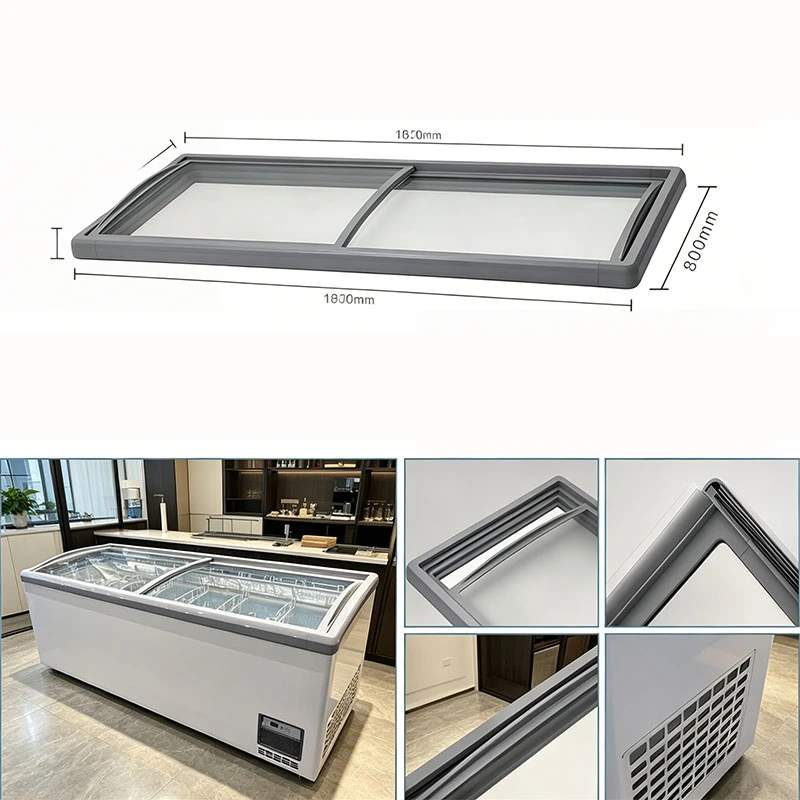
Request these four items with every shipment and disputes become rare. A packing list that states crate count, door count and glass thickness per crate — this is your claims document if anything arrives damaged. Temper evidence for the panels, since tempered safety glass is a regulatory requirement for commercial refrigeration in most destination markets. Photos of the loaded container, taken before the doors close, showing bracing and crate orientation. And the commercial invoice with the correct HS code for tempered safety glass, which directly affects your import duty rate.
Glass is not cardboard; it ships vertically. Doors should be packed on edge in custom plywood crates with EPE interlayers, strapped to prevent shifting, and loaded into the container in an orientation that keeps loads off the panel faces. Corner protectors and desiccant bags complete a standard export crate. For mixed orders combining doors with accessories from the accessories series, hardware should be boxed separately — a loose hinge rattling against tempered glass for 30 days at sea is a scratch waiting to happen.
Q: Can we mix different door models in one container?
A: Yes, as long as each model meets its own MOQ or is priced at the mixed-batch rate. Models sharing glass thickness and edgework consolidate most efficiently.
Q: Who arranges the freight under FOB terms?
A: You book the ocean freight through your forwarder; the supplier delivers the cargo cleared onto the vessel at the named port and provides the export documents.
Q: What happens if glass arrives broken?
A: With container loading photos, crate-level packing lists and marine insurance in place, damaged panels are documented and replaced in the next production batch. This is why the document checklist in section 5 exists.
Huayin Glass Solutions, founded in 2002 and based in Beijiao Industrial Park, Shunde, Foshan, Guangdong — near Beijiao, Nansha and Huangpu ports — operates a 6,000+ m² plant certified to ISO 9001:2015 and China CCC, exporting custom commercial freezer glass and door assemblies to buyers in 50+ countries. You can review our manufacturing capability and client cases before committing.
Ready to price an export order? Send your door drawings, destination port and target quantities to receive a trade-term-matched quotation: contact our export team.
Further reading: ITO Glass vs Defogging Coating · Featured Projects · About Huayin Glass
Huayin Glass Solutions (华银玻璃工艺厂) — founded in 2002, Beijiao Industrial Park, Shunde District, Foshan, Guangdong, China. 6,000+ m² plant, ISO 9001:2015 and China CCC certified, high-tech enterprise, exporting to 50+ countries across Southeast Asia, the Middle East, Africa, the Americas and Europe. Products: commercial freezer glass doors, wine cooler glass, pastry display cabinet glass, home appliance glass panels, curved tempered glass and refrigeration accessories. Learn more: Huayin Glass English site · Products · Commercial Supermarket Freezer Glass · Curved Tempered Glass · Wine Cooler Glass
Add:No. 16 Xingye Road, Beijiao Town Industrial Park, Shunde District, Foshan City, Guangdong Province
PHONE: +86 13509957538
TEL: +86 0757-26131933
Email: huayin_glass@163.com

© 2026 Huayin Glass Solutions All Rights Reserved.


