


 Add:No. 16 Xingye Road, Beijiao Town Industrial Park, Shunde District, Foshan City, Guangdong Province
 PHONE: +86 13509957538
 TEL: +86 0757-26131933
 Email: huayin_glass@163.com

Chinese


A supermarket refrigeration buyer recently sent us a short question: "Anti-fog coating or ITO heated glass—which one actually keeps freezer doors clear in a humid store?" It is a practical question, because both technologies sit on the same shelf but solve condensation in very different ways. Below are the answers in the order buyers usually ask them.
Freezer doors fog because warm, humid air hits a cold glass surface. The moisture in the air condenses into tiny droplets that scatter light, making the display look cloudy and hiding products from customers. The more often the door is opened, the worse it gets.
For commercial freezer glass doors, this is both a visual problem and a sales problem. Retailers lose impulse purchases when shoppers cannot see what is inside. That is why most high-end display freezers specify some form of anti-fog treatment right from the design stage.
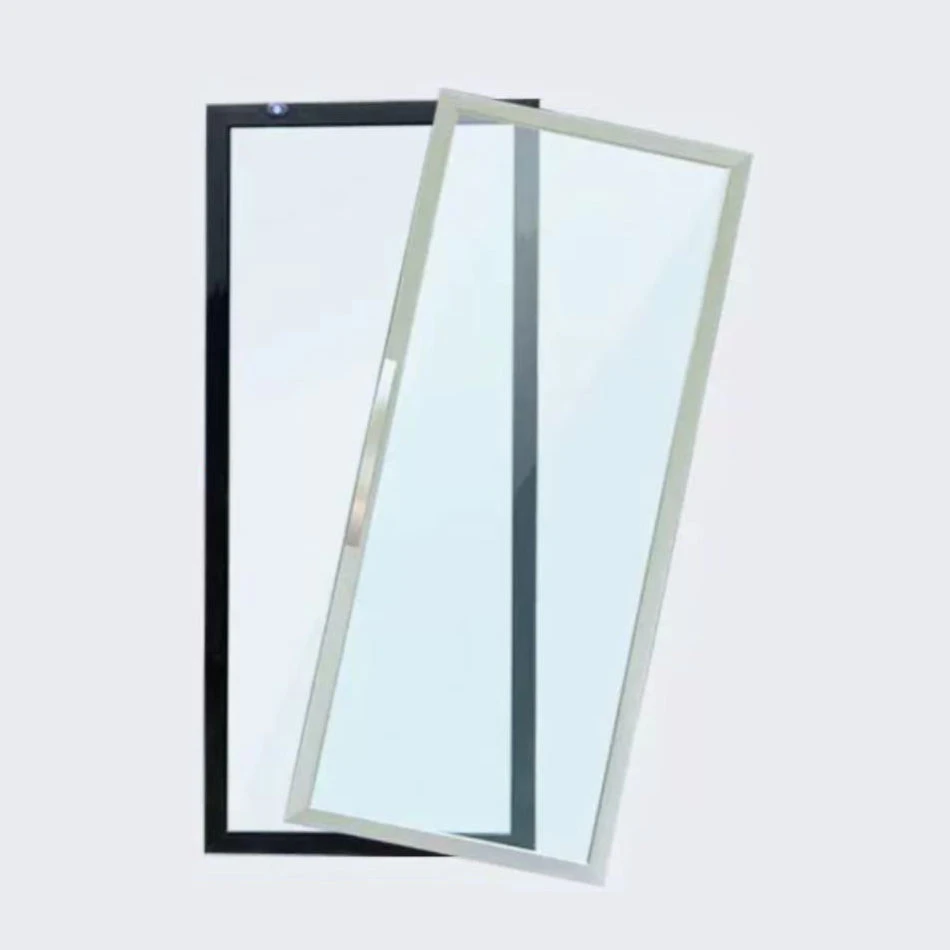
Anti-fog coating is a hydrophilic film applied to the inner or outer surface of the glass. Instead of forming large droplets, the coating spreads the condensed moisture into a thin, transparent sheet of water. Light passes through evenly, so the display stays readable.
The coating can be sprayed, dipped, or sputtered onto the glass. Spray-on coatings are common for budget projects; sputtered coatings last longer and bond more strongly. Some coatings also contain surfactants that help the film spread quickly after each door opening.
Because the coating sits on the surface, it works as long as the surface layer remains intact. Scratches, aggressive cleaning chemicals, or years of wear can reduce its effectiveness. Buyers looking at low-cost display cabinets should ask the supplier how many years the coating is rated for and whether it can be reapplied.
ITO heated glass uses a transparent conductive oxide layer—indium tin oxide—deposited onto the glass surface. When a low-voltage electrical current passes through the ITO layer, the glass warms up just enough to stay above the dew point. Moisture cannot condense because the surface is too warm.
ITO layers are typically laminated or insulated inside freezer insulated glass units. The outer pane remains cool to the touch on the customer side, while the inner pane or the cavity is gently heated. Power consumption is usually 80-250 W per square meter, depending on door size and climate.
Because the heating element is embedded in the glass, it is protected from physical wear and from most cleaning chemicals. That makes ITO a popular choice for high-traffic supermarket freezer glass installations where doors are opened hundreds of times a day.
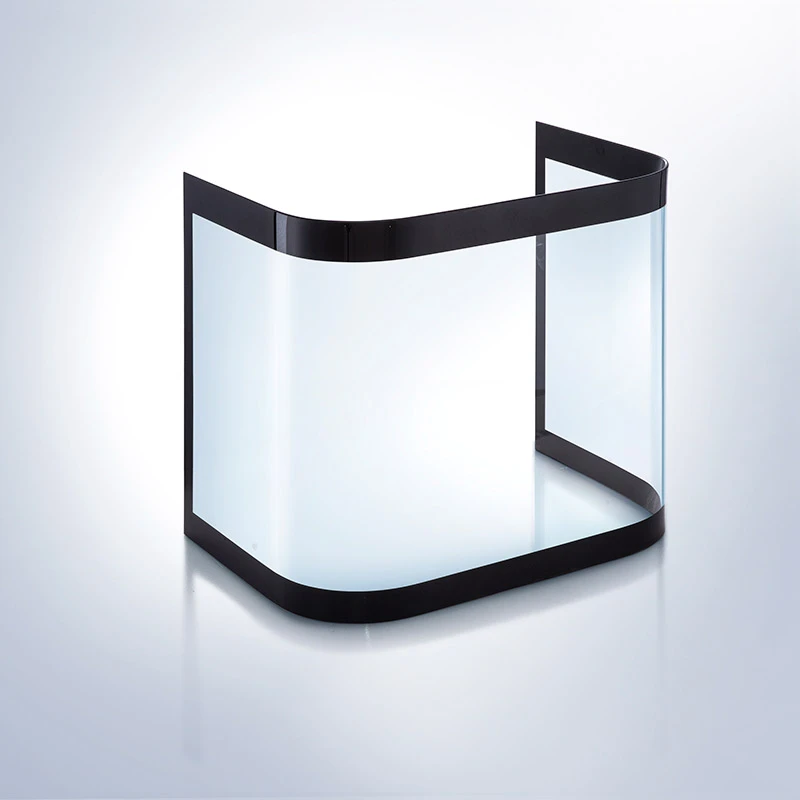
Both technologies solve the same problem, but they suit different project types. Anti-fog coating is passive and has no wiring, so it is simpler to install and cheaper upfront. ITO heated glass is active and needs a power supply and controller, but it performs reliably in extreme humidity and high-traffic stores.
| Comparison item | Anti-fog coating | ITO heated glass |
|---|---|---|
| Working principle | Spreads water into a thin film | Heats glass above dew point |
| Response time | Fast after each door opening | Continuous; 1-3 minutes to full effect |
| Power consumption | None | 80-250 W/m² |
| Service life | 2-5 years, degrades with wear | 10+ years, embedded layer |
| Best fit | Budget display cabinets, low traffic | Supermarkets, high-humidity climates |
| Maintenance | May need reapplication | Minimal; check wiring only |
For a deeper technical comparison, see our earlier article on ITO glass vs defogging coating.
ITO heated glass generally lasts longer because the conductive layer is sealed inside the glass unit or protected by a durable coating. In normal use, the ITO layer can outlast the cabinet itself. Anti-fog coatings, by contrast, live on the exposed surface and are slowly worn down by cleaning, abrasion, and environmental exposure.
That said, a high-quality sputtered anti-fog coating can still give several years of reliable performance in light-traffic applications. The key is matching the technology to the expected duty cycle. A convenience store with occasional door openings may be fine with coating; a busy supermarket needs the durability of ITO.
Choose anti-fog coating when upfront cost is the main constraint, traffic is light, and the cabinet is used in a moderate-humidity environment. Choose ITO heated glass when the cabinet will sit in a high-humidity supermarket, face frequent door openings, or need to maintain premium product visibility for years.
If you are unsure which fits your cabinet, the simplest next step is to send the door size, target climate, and expected daily opening cycles. A qualified China freezer glass manufacturer can model the heat load and recommend the right glass build-up.
Huayin Glass Solutions supplies both anti-fog coated glass and ITO heated insulated glass for custom freezer glass doors. Established in 2002 and based in Shunde, Foshan, Guangdong, we operate a 6,000+ m² facility with ISO 9001:2015 and CCC certification, exporting to 50+ countries.
Send your project specs and get a free glass specification review and sample quotation.
Further reading: Freezer Glass · Home Appliance Glass · Manufacturing Capability · Featured Projects
Add:No. 16 Xingye Road, Beijiao Town Industrial Park, Shunde District, Foshan City, Guangdong Province
PHONE: +86 13509957538
TEL: +86 0757-26131933
Email: huayin_glass@163.com

© 2026 Huayin Glass Solutions All Rights Reserved.


