


 Add:No. 16 Xingye Road, Beijiao Town Industrial Park, Shunde District, Foshan City, Guangdong Province
 PHONE: +86 13509957538
 TEL: +86 0757-26131933
 Email: huayin_glass@163.com

Chinese


A home appliance glass panel looks like the simplest component on a bill of materials — flat, cheap, and easy to quote. Yet it is also the face of the appliance: the part your customer touches, wipes, and judges every day. Buyers who treat it as a commodity regularly end up with fogged induction cooker tops, faded boiler-panel logos, and panels that crack in the field. This guide breaks down the six specifications an OEM/ODM buyer should verify before placing an order with a China appliance glass panel factory.
Architectural flat glass is judged by look and strength. An appliance panel is judged by how it behaves after thousands of heating cycles, wipe-downs with household chemicals, and shipping vibrations. The same 4 mm tempered sheet can be a perfect induction cooker glass panel in one factory's hands and a warranty liability in another's.
The difference sits in process control: when the panel is cut, drilled, printed, and tempered, and whether the factory runs all of those steps in-house or subcontracts them. That is why the six specs below are written as verification items, not brochure claims. Confirm each one with evidence — a report, a sample, or a line-side photo — before committing to a supplier.
Panel requirements vary more across appliance categories than most buyers expect. Use this table as a starting point and have the factory confirm feasibility against your drawing.
| Appliance | Typical glass build | Key spec to confirm |
|---|---|---|
| Induction cooker | 4 mm tempered, silk print on underside | Thermal shock and scratch resistance |
| Wall-hung boiler | 3.2-4 mm tempered, flat or curved | Print adhesion after condensation cycles |
| Water heater | 3.2-4 mm tempered panel | Humidity resistance of printed layer |
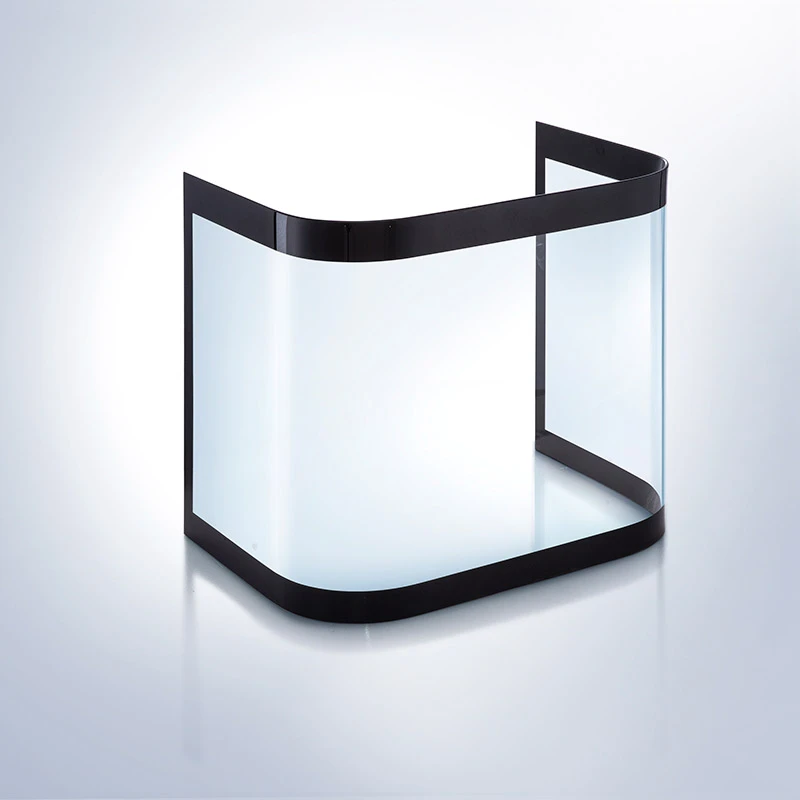
| Steaming/bun machine | Curved tempered panel | Bending radius consistency across batches |
Ask for the tempering certificate and, ideally, a fragmentation test video: proper tempered glass should break into small, blunt granules rather than shards. A factory that runs its own forced-convection tempering furnace can hold surface stress and flatness more consistently than one that outsources tempering — and will show you the data if asked.
Logo fading is the most common cosmetic failure reported on appliance panels. Two factors decide print durability: when the ink is applied, and how it is cured. Printing before tempering fuses the ink into the glass surface at high temperature, which holds up far better than UV-cured prints applied afterwards.
Verify with three quick tests on the sample: a cross-hatch adhesion test, an alcohol-rub test, and a household-cleaner wipe test. Also lock the color reference — a signed first-article sample per batch prevents the "logo slightly different every shipment" problem that quietly erodes brand consistency across markets.
Panels sitting above heat sources — induction cookers, gas boilers, water heaters — need confirmed thermal shock margins, not just a "heat-resistant" label. Ask which temperature delta the glass build is rated for and how it was tested. For high-humidity installations such as bathrooms, the printed layer on a water heater glass panel should also pass damp-heat cycling without blistering.
If your housing design calls for a curved fascia — common on wall-hung boiler panels and commercial steaming equipment — the bending radius and curvature tolerance become part of the same spec. Curved panels bent and tempered in one sequence hold their geometry better than parts bent and tempered separately.

Panels rarely ship alone; they drop into a plastic or metal bezel with clips, sensors, or touch modules. Every hole, notch, and chamfer must land inside tolerance or assembly lines slow down. Confirm three things: edge polish quality (no chips visible at arm's length), hole/slot positional tolerance (typically ±0.5 mm for appliance assemblies), and whether machining happens before tempering — drilling or cutting after tempering is how panels crack in the field.
For overseas OEM orders, packaging causes more losses than glass quality itself. Panels should be interleaved with soft separators, boxed with corner protection, and palletized for container handling. Ask for a packing drawing, not just a photo, and confirm the factory has export experience to your region — an established client list across 50+ export markets is a reasonable proxy.
Finally, agree on the first-article inspection process: who signs the sample, which tests trigger re-sampling, and how revisions are documented. A factory that already supplies appliance brands as an OEM appliance glass supplier will have this workflow ready on day one.
Q: What is the typical MOQ for custom appliance glass panels?
A: It depends on the printing and curvature. A new printed flat panel usually starts from a few hundred pieces per design; curved tooling typically needs higher volumes to amortize the mold. Share your drawing for a project-specific quote.
Q: Can one factory supply both flat and curved panels for the same appliance series?
A: Yes, if it runs both flat and curved tempering lines in-house. Mixing suppliers for one series usually creates color and thickness mismatches between the flat and curved parts of the same housing.
Q: How long does sampling take?
A: For standard flat panels, 7-10 working days including print proofing. Curved panels add tooling time of roughly 5-7 days for a new radius.
The common thread across all six specs: verify with evidence, not adjectives. A capable China glass panel factory expects the questions and has reports ready. Ready to quote your project? Send your panel drawing and target market to Huayin Glass for a free DFM review and sample quotation.
Further reading: Product range · ITO glass vs defogging coating · Featured projects
Add:No. 16 Xingye Road, Beijiao Town Industrial Park, Shunde District, Foshan City, Guangdong Province
PHONE: +86 13509957538
TEL: +86 0757-26131933
Email: huayin_glass@163.com

© 2026 Huayin Glass Solutions All Rights Reserved.


