


 Add:No. 16 Xingye Road, Beijiao Town Industrial Park, Shunde District, Foshan City, Guangdong Province
 PHONE: +86 13509957538
 TEL: +86 0757-26131933
 Email: huayin_glass@163.com

Chinese


Triple-pane insulated glass is a sealed unit built from three panes of glass separated by two dry-air or argon-filled cavities. It is specified for commercial freezer doors where double glazing cannot hold the cabinet temperature gradient without excessive frost load, long compressor runtimes, or condensation on the outer surface. This brief covers the construction, the thermal logic behind the third pane, trade-offs against double glazing, and the parameters that matter when sourcing from a glass deep-processing factory.
Read from the cold side outward, a triple-pane freezer door unit stacks: tempered inner pane, spacer cavity, middle pane, spacer cavity, outer pane. Both cavities are sealed with desiccant-filled spacers and filled with dry air or argon.
Spacer type and gas fill control conduction through the cavities. Warm-edge spacers reduce thermal bridging at the perimeter; argon lowers the thermal conductivity of the fill compared with dry air. For freezer-duty units, cavity width is specified together with gas fill rather than chosen independently.
Low-E coatings sit on cavity-facing surfaces, never on exposed skins. Each coated surface cuts radiative transfer across its cavity — which is why a three-pane build offers two coating positions instead of one, and why coating position is a specification item, not a detail.
| Parameter | Typical options | Function |
|---|---|---|
| Panes | 3 × tempered glass | Two insulating cavities instead of one |
| Cavity fill | Dry air or argon | Lowers conductive transfer across cavities |
| Spacer | Warm-edge or aluminum + desiccant | Controls perimeter bridging and internal humidity |
| Low-E surfaces | On cavity-facing panes | Cuts radiative heat transfer |
| Safety treatment | Full tempering | Required for door-duty glazing |
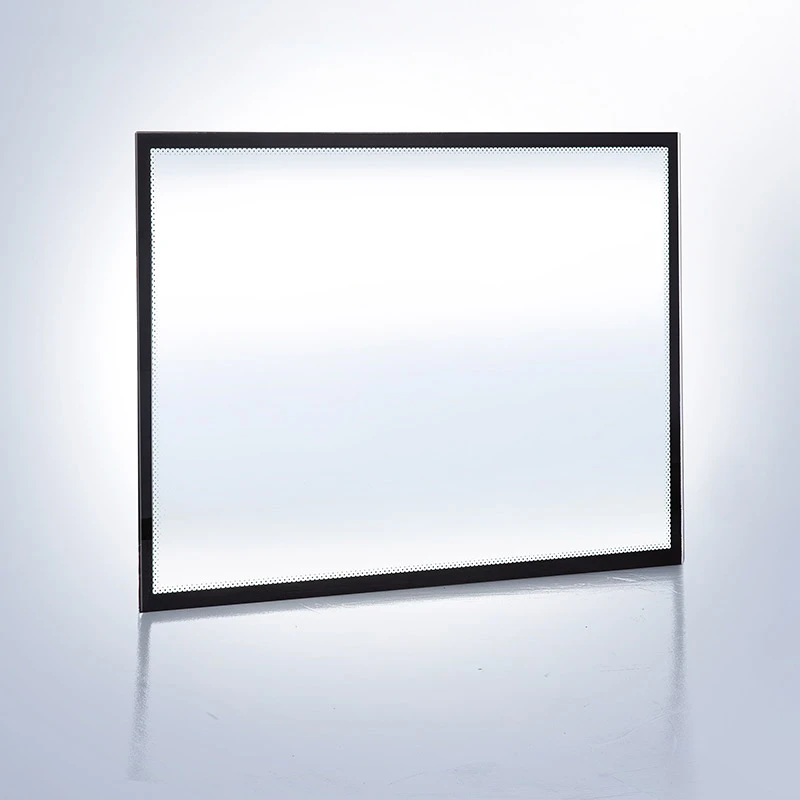
Heat crosses a door assembly by conduction through the panes and gas fill, and by radiation between surfaces. A third pane inserts a second low-conductance cavity and two additional surfaces, so both transfer paths are interrupted twice rather than once.
Most of the improvement sits in radiation blocking and gas conductivity. Because the added cavity is thin, gains are large at first and taper off as total thickness grows — cavity widths, not overall thickness alone, decide performance.
Lower heat ingress reduces compressor duty and slows frost build-up on evaporator surfaces. In retail terms, the door skin stays closer to store temperature, products near the glass hold a steadier display temperature, and defrost intervals can be stretched.
| Dimension | Double glazed | Triple glazed |
|---|---|---|
| Cavities | One | Two |
| U-value | Baseline | Typically one-third to one-half lower |
| Unit weight | Lower | Higher — verify hinge and frame ratings |
| Unit cost | Lower | Higher |
| Outer surface temperature | Colder, nearer dew point | Warmer, farther from dew point |
| Best fit | Medium-temperature cabinets, climate-controlled stores | Low-temperature freezers, high-ambient or humid markets |
The decisive question is not which build is better in the abstract, but which holds the outer skin above the local dew point at the target cabinet temperature. A −18°C island freezer in a humid coastal market and a 0°C reach-in cabinet in an air-conditioned supermarket do not get the same answer.
The outer pane of a freezer door sits far below room temperature. When its surface drops below the store's dew point, condensation forms, visibility drops, and water migrates into the frame. Glazing that keeps the outer skin warmer directly reduces this risk — the core argument for a second cavity.
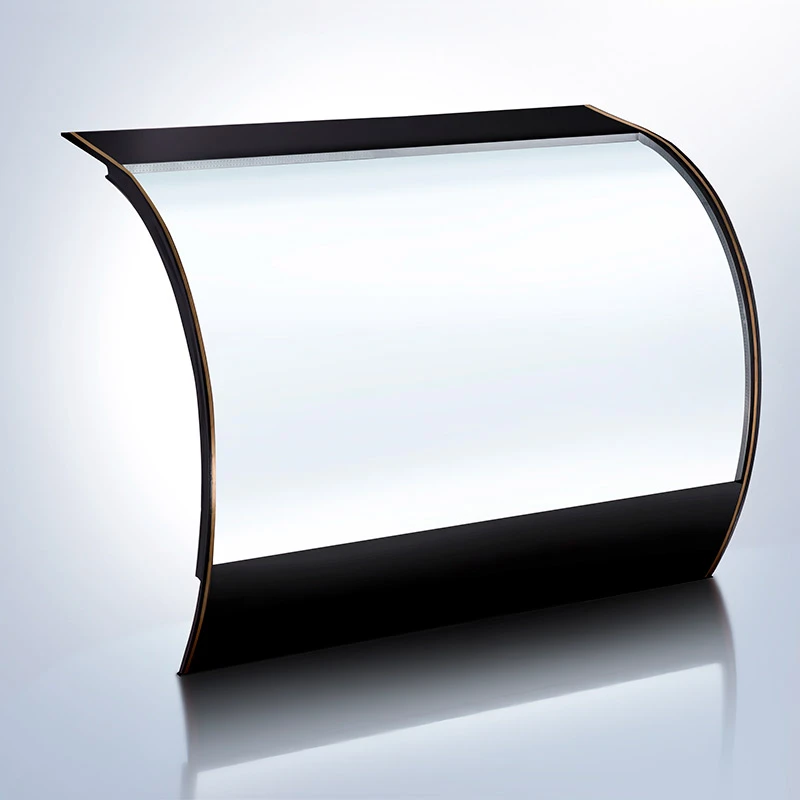
Where even triple glazing cannot hold the skin above dew point — high-humidity regions, frequent door openings — the outer pane is replaced with an ITO heated pane. Coated curved tempered heated IG units combine a Low-E surface, tempered strength, and active heating in one build, while hot bent insulated heating glass serves curved door designs the same way.
| Parameter | Options to specify | Why it matters |
|---|---|---|
| Cabinet temperature | Target setpoint | Sets the thermal gradient the unit must hold |
| Store climate | Typical humidity and ambient | Decides whether heating glass is required |
| Pane thickness | Per load and span calculation | Strength and thermal resistance |
| Coating | Low-E surfaces and their position | Radiative performance |
| Gas fill | Argon or dry air | Conductive performance |
| Shape | Flat or curved, with chord and rise | Tooling and assembly method |
| Frame interface | Gasket and hinge dimensions | Fit and seal quality |
Supplying the first three items is usually enough for an engineering team to propose a build of materials. The most common gap in first inquiries is omitting the store climate — the single variable that decides whether triple glazing alone is sufficient.
| Term | Definition |
|---|---|
| Triple-pane (triple glazing) | Sealed unit of three panes forming two insulating cavities |
| U-value | Rate of heat transfer through the unit per unit area and temperature difference |
| Low-E coating | Microscopically thin metallic layer that reflects radiant heat |
| Argon fill | Inert gas filling the cavities to lower conductive transfer |
| Warm-edge spacer | Perimeter spacer with reduced thermal conductivity |
| Dew point | Temperature at which air reaches saturation and condensation begins |
Q: Is triple-pane glazing worth the added weight and cost on every freezer door?
A: No. Medium-temperature cabinets in climate-controlled stores usually perform well with double glazing. Triple-pane earns its cost in low-temperature freezers, high-ambient regions, and stores where door openings are frequent.
Q: Can triple-pane units be curved or combined with ITO heating?
A: Yes, but bending, coating sequencing, and insulated assembly must be engineered together. Treat these combinations as sample-stage projects and validate curvature fit and heating uniformity before committing to volume.
Huayin Glass Solutions manufactures insulated units and complete door assemblies — including freezer glass, supermarket freezer glass, and curved tempered heated builds — at its 6,000+ square meter factory in Foshan, Guangdong, with in-house cutting, bending, tempering, coating, and insulated assembly lines serving glass door programs for brands in 50+ countries.
Send door dimensions, cabinet temperature, and destination market for a build-of-materials recommendation: contact our engineering team.
Further reading: Manufacturing capability · ITO heated glass vs defogging coating · Featured projects
Add:No. 16 Xingye Road, Beijiao Town Industrial Park, Shunde District, Foshan City, Guangdong Province
PHONE: +86 13509957538
TEL: +86 0757-26131933
Email: huayin_glass@163.com

© 2026 Huayin Glass Solutions All Rights Reserved.


