


 Add:No. 16 Xingye Road, Beijiao Town Industrial Park, Shunde District, Foshan City, Guangdong Province
 PHONE: +86 13509957538
 TEL: +86 0757-26131933
 Email: huayin_glass@163.com

Chinese


Walk into almost any tropical supermarket and you will see the same problem: vertical freezer doors coated in condensation, shoppers wiping the glass with a sleeve to read a price tag. For a supermarket chain operating 40-plus stores across Southeast Asia, this was not a minor inconvenience. It was a daily drag on product visibility, a recurring maintenance cost, and an increasingly painful energy bill. This case study follows one chain's decision to replace 180 fogging doors with Low-E insulated commercial freezer glass, and what their procurement team learned about sourcing from a China freezer glass manufacturer.
Their situation is common across humid retail markets in Southeast Asia, the Middle East, Africa, and Latin America. Older freezer cabinets ship with single-pane glass doors — cheap to buy initially, but prone to condensation and thermally leaky. As electricity tariffs rose and customer complaints about unreadable labels accumulated, the chain's engineering team started quantifying the cost of doing nothing.
The chain's engineering team did something most buyers never do — they measured. Over a three-month audit they tracked three numbers across a representative sample of 20 stores.
First, defog downtime. Store staff reported wiping door glass an average of 14 times per shift during peak humidity months, with each wipe interrupting customer viewing time. Second, compressor run time. Cabinets with single-pane doors cycled noticeably more often than their newer Low-E equipped units in the same store format. Third, door replacement rate. Gasket wear was accelerated because staff were opening doors more frequently to inspect products they could not see through the fogged glass.
None of these numbers appear on a typical supplier spec sheet, but together they pointed to a single conclusion: the glass was the problem, not the refrigeration system. Replacing the compressor would have cost more and solved nothing. Replacing the glass was the targeted fix.
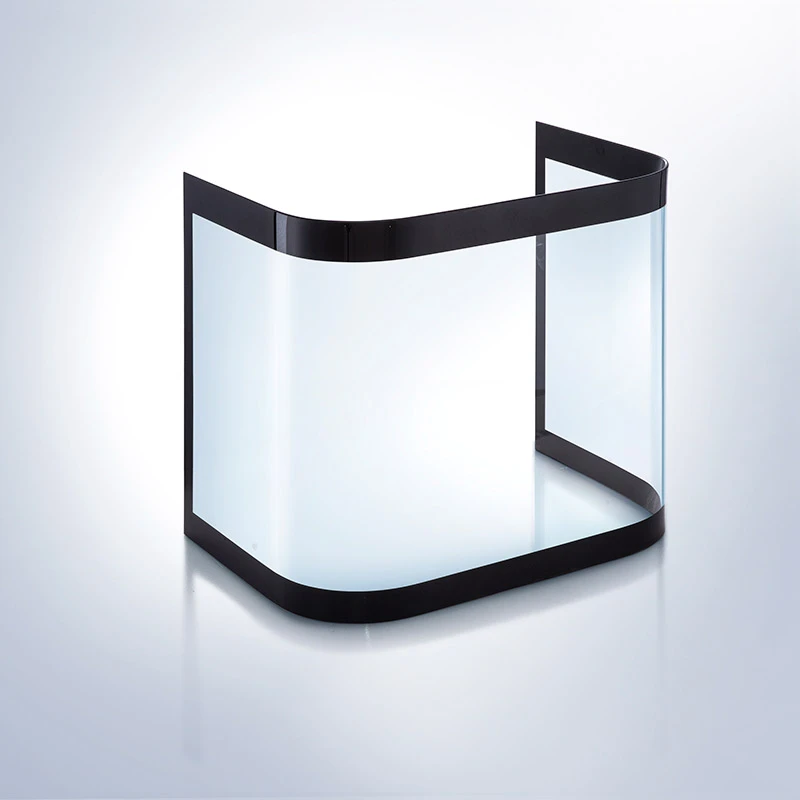
With the problem quantified, the team converted it into a purchasing specification. Their existing cabinets constrained the design: door frames, hinge positions, and gasket channels had to be reused, which meant glass thickness and edge profile were effectively fixed. The specification focused on thermal performance, condensation resistance, and dimensional fit.
| Requirement | Target | Reason |
|---|---|---|
| U-value | ≤ 1.8 W/(m²·K) | Cut compressor cycling in high-ambient stores |
| Condensation | No visible fog at 80% RH, 25°C ambient | Product visibility during peak humidity months |
| Thickness | Match original frame profile exactly | Avoid cabinet modification or frame replacement |
| Edge finish | Stepped edge, polished, ±0.5mm | Fit existing gasket channel without leakage |
| Lead time | ≤ 30 days per batch | Roll out store by store without closing locations |
| Light transmission | ≥ 75% visible light | Maintain product visibility and store brightness |
The procurement team sent this specification to four freezer glass suppliers in China, including two trading companies and two factories with in-house tempered glass and insulated glass lines.
After evaluating samples and factory audits, the chain selected a Low-E insulated freezer glass configuration with argon filling and a warm-edge spacer. The supplier was a Foshan-based glass deep processing factory with 6,000+ square meters of manufacturing space and in-house tempering, bending, and insulated glass assembly.
The initial instinct from the store operations team was to specify thicker glass. That would have added weight, stressed the existing hinges, and — most importantly — would not have addressed radiative heat transfer, which is the dominant loss path through a freezer door in a tropical climate. Low-E coating reflects infrared radiation back into the cabinet while transmitting visible light; argon filling suppresses conductive transfer between panes. Together they achieve a lower U-value than a significantly thicker single pane.
Heated ITO glass was considered and quoted. It was rejected for this specific case because the stores used ambient air conditioning that kept exterior glass surface temperature above the dew point for most of the day. Adding electrical heating would have increased both unit cost and ongoing power draw for limited incremental benefit. For genuinely humid or unconditioned retail environments, coated curved tempered anti-fog glass or heated ITO remains the stronger option.
To reuse the cabinets and avoid store closure during installation, glass was produced with a stepped edge profile matching the original gasket channel. This detail, easy to overlook during sourcing, eliminated the need for cabinet modification and kept each store's downtime under one day. The factory produced a custom edge profile based on a physical sample door shipped to China.
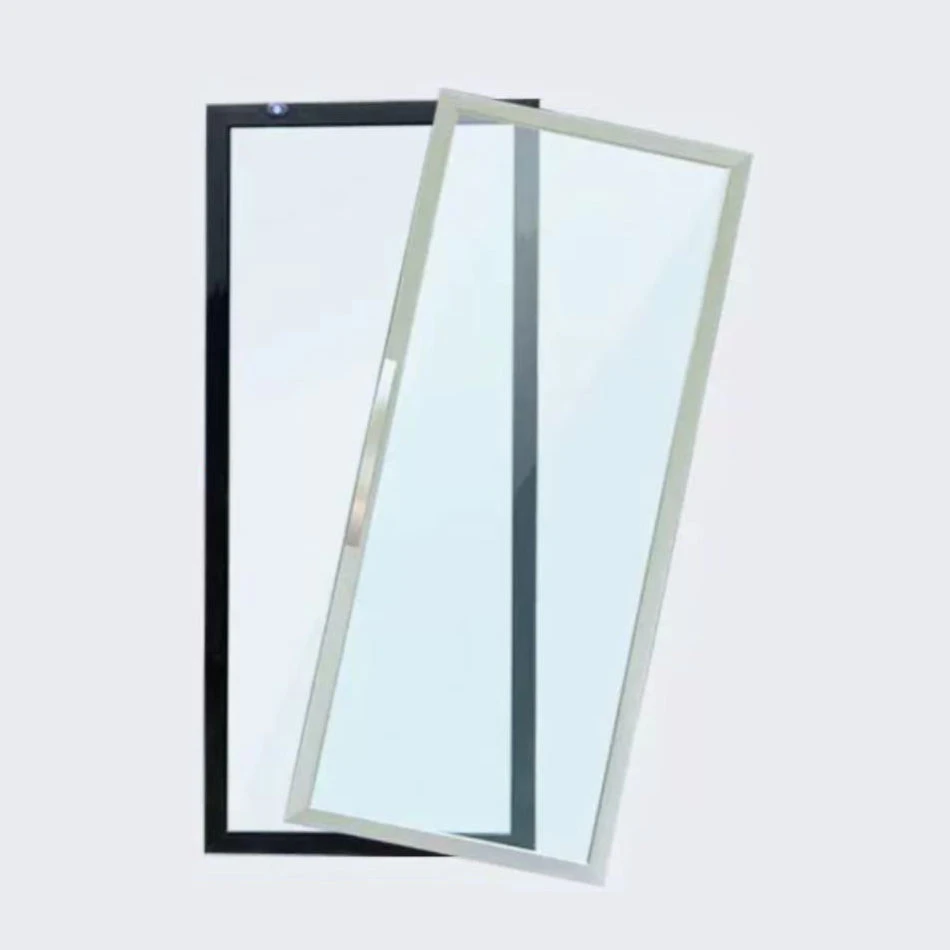
The chain requested 5 sample doors before committing to the full 180-door order. Samples were installed in three stores representing different humidity profiles — a coastal high-humidity location, an inland moderate-humidity store, and an urban store with heavy air-conditioning — and monitored for six weeks.
Validation covered three checkpoints: fog-free performance at peak humidity, gasket seal integrity after repeated open-close cycles, and dimensional fit within the existing frame without cabinet modification. One batch of samples showed a minor spacer alignment issue that was corrected before mass production — the main reason the sampling stage was worth the calendar time.
The factory's quality team also provided batch test reports for each production lot: fragment status per EN 12150, surface stress measurement, and argon concentration verification by gas chromatography.
Two quarters after completing the 180-door retrofit across 12 stores, the chain reported the following directional outcomes across the sample locations.
| Metric | Direction of change |
|---|---|
| Visible condensation on door glass | Largely eliminated during conditioned store hours |
| Manual glass wiping by staff | Sharply reduced across all shifts |
| Compressor cycling frequency | Reduced versus single-pane baseline |
| Gasket replacement frequency | Lower than the prior year |
| Customer complaints about product visibility | Effectively stopped |
| Door-related maintenance calls | Down significantly |
Absolute figures varied by store climate, cabinet age, and refrigeration system condition, which is why the chain chose to report direction rather than a single headline percentage. Buyers evaluating similar projects should build their own baseline measurement before quoting savings.
Q: Should we always specify the highest-performing glass available?
A: No. Heated ITO glass was rejected here because the ambient conditions did not justify the added cost and power draw. Match the glazing specification to the actual operating environment, not to the maximum spec on a brochure. A good glass deep processing factory will ask about your store climate before recommending a configuration.
Q: How much does the sampling stage delay a retrofit project?
A: Typically 7-10 working days for sample production plus field observation time. In this project it caught a spacer alignment issue that would have affected the full 180-door order. The cost of skipping sampling is almost always higher than the calendar delay.
The broader lesson: measure your existing baseline first, convert it into a numeric specification, then source against that specification rather than comparing brochures. Huayin Glass Solutions covers the full chain from CNC cutting to insulated glass assembly, which is what allowed a custom stepped-edge profile to be produced without changing the cabinet design.
Planning a freezer glass retrofit or sourcing Low-E insulated glass for new cabinets? Send your cabinet dimensions and operating conditions to our engineering team for a free DFM assessment and sample quotation.
Further reading: ITO glass vs defogging coating · Featured projects · Client cases
Add:No. 16 Xingye Road, Beijiao Town Industrial Park, Shunde District, Foshan City, Guangdong Province
PHONE: +86 13509957538
TEL: +86 0757-26131933
Email: huayin_glass@163.com

© 2026 Huayin Glass Solutions All Rights Reserved.


