


 Add:No. 16 Xingye Road, Beijiao Town Industrial Park, Shunde District, Foshan City, Guangdong Province
 PHONE: +86 13509957538
 TEL: +86 0757-26131933
 Email: huayin_glass@163.com

Chinese


Ordering refrigeration accessories from a China supplier alongside your glass door OEM program is the fastest way to cut landed cost — and the fastest way to inherit tolerance problems if verification is skipped. Gaskets, hinges, controllers and LED strips look interchangeable in catalogs; in service they decide seal quality, door cycle life and service-call rates.
Key takeaways
A glass door assembly is a system: gasket compression, hinge alignment and glass thickness interact. When the door and its accessories come from the same factory, the gasket loop is die-designed around the real door profile and hinge holes are drilled against the actual glass thickness — not catalog assumptions. Sourcing an OEM glass door from one vendor and its gaskets from another re-introduces exactly the tolerance gaps you paid the OEM to eliminate.
This is why full-line factories offering an accessories series alongside door production consistently show lower assembly rework rates at customer factories.
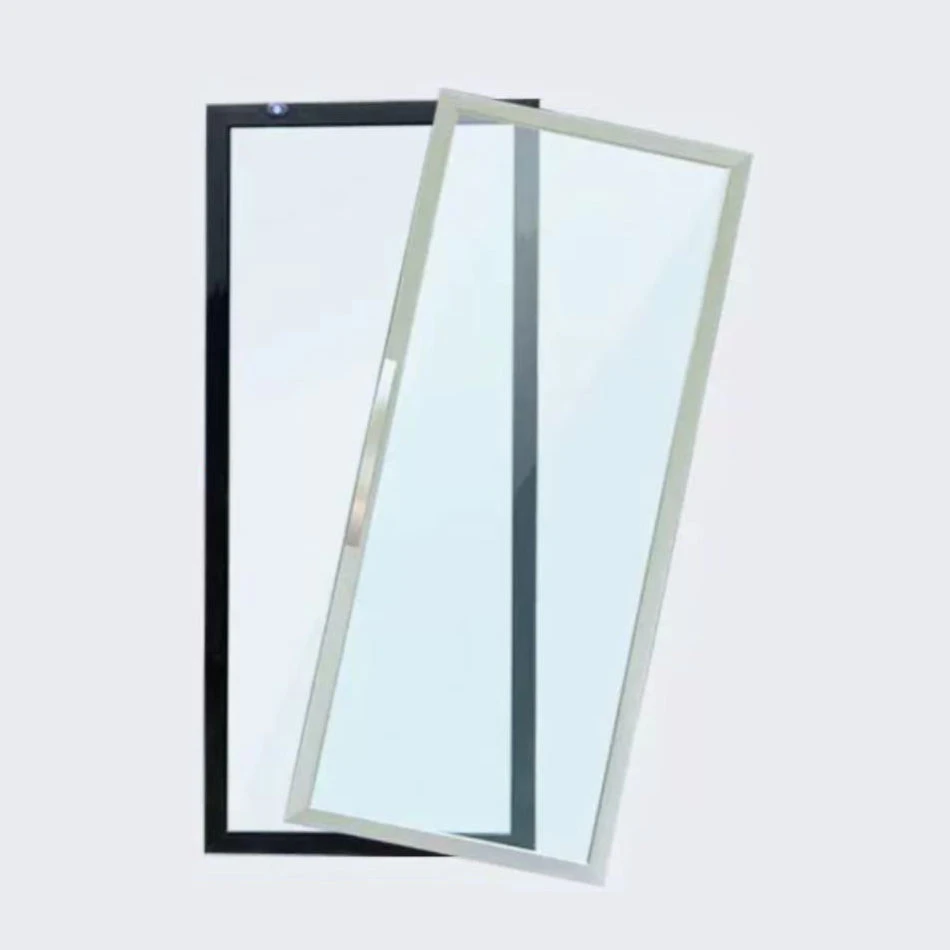
Run this matrix across every candidate supplier. The third column is what separates a factory from a trading office.
| Component | Verify this | Red flag |
|---|---|---|
| Magnetic door gasket | Food-grade compound data sheet, magnetic force spec, corner welding method | No compound documentation, "universal profile" claims |
| Self-closing hinge | Cycle-test data (50,000+ opens), torque curve, spring material | Spring tension quoted without a cycle count |
| Door handle | Material grade, fastener interface matched to glass thickness | Generic "fits all" answer |
| Temperature controller | Sensor type, relay load rating, CE/UL as destination requires | No load rating or certification stated |
| Fan motor | Airflow figure, noise level in dB, bearing type, voltage/frequency | Noise figure missing entirely |
| LED light strip | IP rating, lumen output, connector standard, food-zone safety | No IP rating near evaporator zones |
| Caster wheel / leveling foot | Load rating per wheel, brake option, adjustable travel range | Load rating unstated |
A perfect Low-E insulated door with a fatigued gasket still leaks cold air along the perimeter. Gasket quality is judged by compression set — how well the compound recovers after years of door slamming — and by magnetic force uniformity along the full loop. Hinge quality shows up as sag: a hinge that drifts a few tenths of a millimetre per season eventually prevents the gasket from seating at all.
Specify cycle-test reports for self-closing hinges and compound data sheets for the magnetic door gasket at quotation stage, and confirm the door handle interface against your glass thickness at the same time.
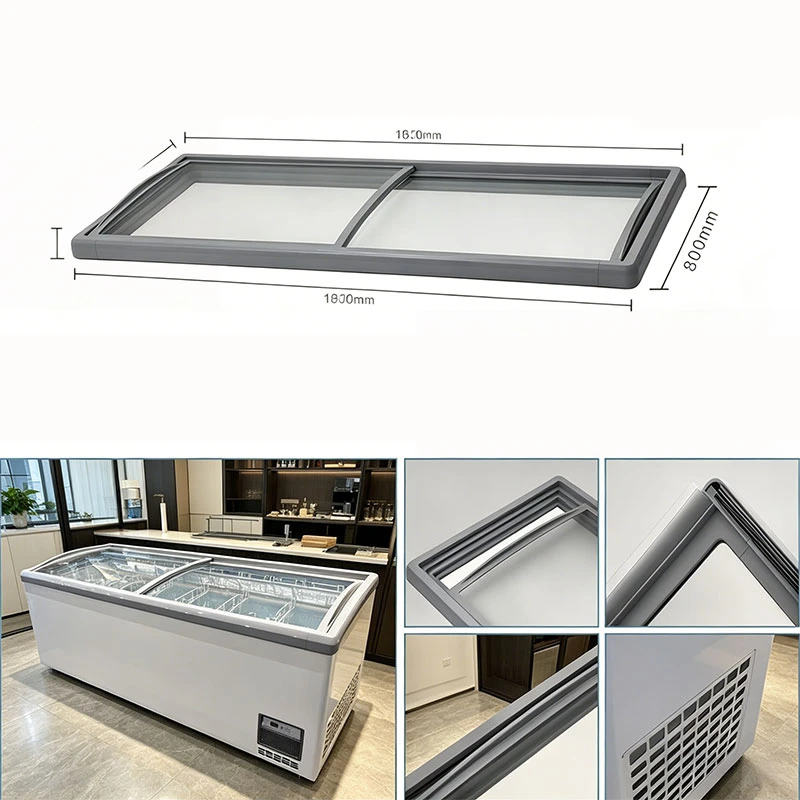
Export programs fail most often on voltage and connector assumptions. A digital temperature controller quoted for 220V/50Hz will not survive a 115V/60Hz North American cabinet; a fan motor must be matched for airflow, noise and bearing type; an LED light strip needs its driver voltage, connector standard and IP rating confirmed in writing before tooling. State the destination market's voltage, frequency and certification requirements in the RFQ itself.
Tolerance mismatch between vendors, no single party accountable for fit, and freight consolidation lost. The unit prices look lower; the rework invoices are not.
Compound quality and magnetic force decide the energy bill for the cabinet's entire service life. A gasket that costs 10% less and leaks 8% more cold air is the more expensive part.
Mixed bulk cartons scratch acrylic covers and bend hinge plates. Define per-accessory bags, dividers and carton labeling before the first shipment, not after the first claim.
Need a one-stop quote for doors plus accessories? Send your accessory list and door drawings to Huayin Glass — engineering feedback within 24 hours, backed by a 6,000+ m² factory in Foshan producing both the glass doors and the full accessories range.
Further reading: Accessories series · Wire shelves · Caster wheels · Manufacturing capability
Add:No. 16 Xingye Road, Beijiao Town Industrial Park, Shunde District, Foshan City, Guangdong Province
PHONE: +86 13509957538
TEL: +86 0757-26131933
Email: huayin_glass@163.com

© 2026 Huayin Glass Solutions All Rights Reserved.


