


 Add:No. 16 Xingye Road, Beijiao Town Industrial Park, Shunde District, Foshan City, Guangdong Province
 PHONE: +86 13509957538
 TEL: +86 0757-26131933
 Email: huayin_glass@163.com

Chinese


Argon-filled insulated glass is one of the most cost-effective upgrades a commercial freezer manufacturer can make to improve energy efficiency and condensation resistance. By replacing the air between two or more glass lites with inert argon gas, the insulated glass unit (IGU) reduces convective heat transfer and helps freezer doors maintain a stable internal temperature. In this guide, Huayin Glass Solutions explains how gas-filled IGUs work, why they outperform air-filled units, and what OEM buyers should specify when sourcing freezer glass doors from a China manufacturer.
Commercial freezer doors are thermal bridges. Every time a customer opens a display case, warm humid air rushes in and the compressor has to work harder. The glass itself is responsible for a significant share of standby heat gain, especially in single-pane or poorly sealed doors. Filling the cavity of an IGU with argon gas slows down heat transfer between the panes, which directly reduces compressor run-time and energy bills.
For OEMs building export freezer lines for supermarkets, convenience stores, and beverage chains, argon-filled insulated glass is a specification that buyers increasingly expect. It also pairs naturally with other premium features such as ITO heated coatings, Low-E films, and warm-edge spacers to create a complete thermal management system.
An insulated glass unit is built from two or more glass lites separated by a spacer and sealed around the perimeter. In a standard air-filled unit, the air inside the cavity transfers heat through conduction and convection. Argon is a denser, monoatomic gas with lower thermal conductivity than air, so it suppresses convective currents and reduces heat flow.
At Huayin Glass Solutions, every commercial supermarket freezer glass IGU is filled and tested on an automated gas-filling line, with concentration targets typically set at 90% or higher.
Not every gas fill is right for every application. The table below compares the three most common cavity gases used in freezer and refrigeration glass.
| Feature | Air-Filled IGU | Argon-Filled IGU |
|---|---|---|
| Thermal conductivity | Higher | Lower (~33% better than air) |
| U-value improvement | Baseline | 10%–15% better |
| Cost | Lowest | Moderate |
| Gas retention | N/A | Good with quality dual seal |
| Best use case | Budget冷藏柜,常温展示 | Freezer doors, energy-rated displays |
Krypton offers even lower conductivity than argon but is significantly more expensive and is usually reserved for thin-profile triple-glazed units where space is limited. For most freezer door insulated glass applications, argon hits the best balance of performance, cost, and availability.
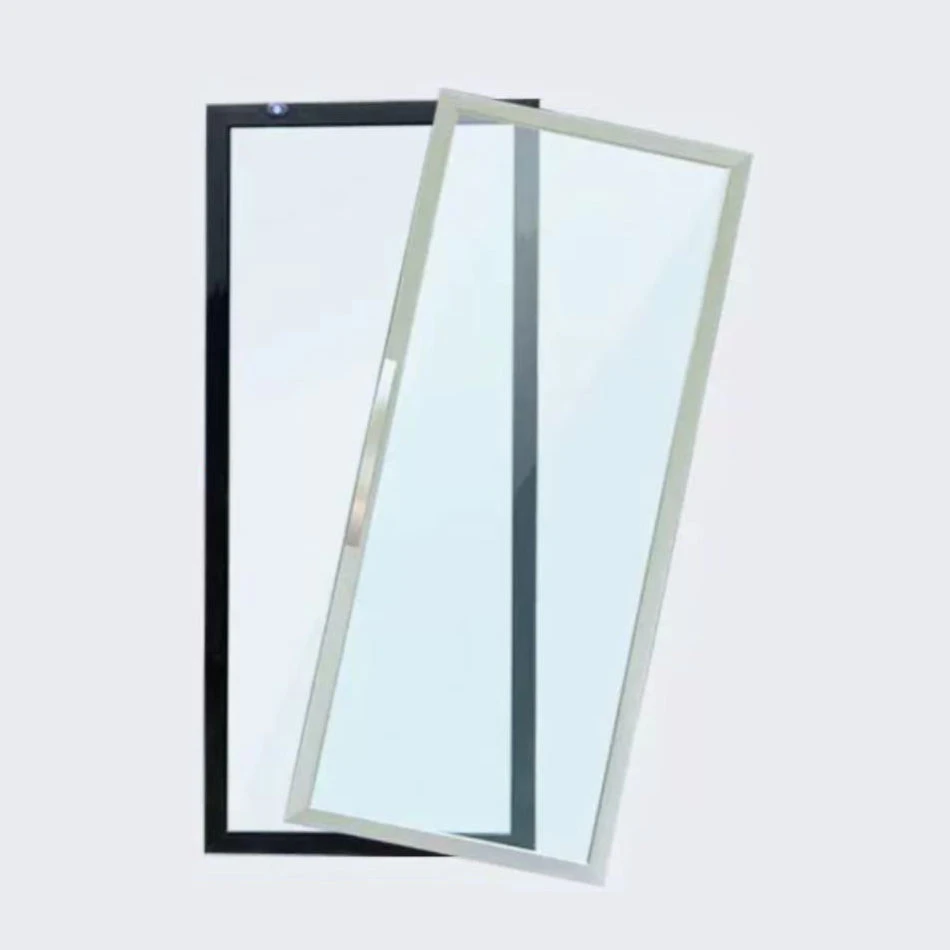
Argon reduces convective heat transfer, but it does not block radiant heat. That is where Low-E (low-emissivity) coatings come in. A Low-E coating is an ultra-thin metallic layer applied to one of the inner glass surfaces. It reflects long-wave infrared radiation back toward the cold side while allowing visible light to pass through.
When argon fill and Low-E coating are used together, the U-value of a double-pane freezer door can drop by 25%–40% compared with a basic air-filled clear glass door. This combination is especially valuable for energy-label programs such as ENERGY STAR, EU energy labels, and Middle Eastern energy-efficiency regulations.
In a typical double-pane freezer door, the Low-E coating is usually placed on surface #3 (the inner face of the outer lite, facing the cavity). Your glass supplier can adjust the coating position based on whether the primary goal is heat rejection, condensation resistance, or anti-fog performance.
For projects that also need active defogging, Huayin Glass offers ITO heated freezer glass that can be combined with argon fill and Low-E coatings into one integrated door solution.
Gas fill is only as good as the seal that keeps it inside. A poorly sealed IGU will lose argon within months, negating the energy benefit. At Huayin Glass Solutions, we run the following checks on argon-filled insulated glass units:
You can learn more about our production capabilities on the Manufacturing page.
Q: How long does argon stay in an insulated glass unit?
A: With a high-quality dual-seal system, argon retention can remain above 80% for 10–15 years. Cheaper single-seal units may lose gas much faster.
Q: Is argon filling safe for food-display applications?
A: Yes. Argon is an inert, non-toxic gas already present in the atmosphere. It poses no risk to food safety or human health.
Q: Can argon-filled IGUs be used with curved or bent glass?
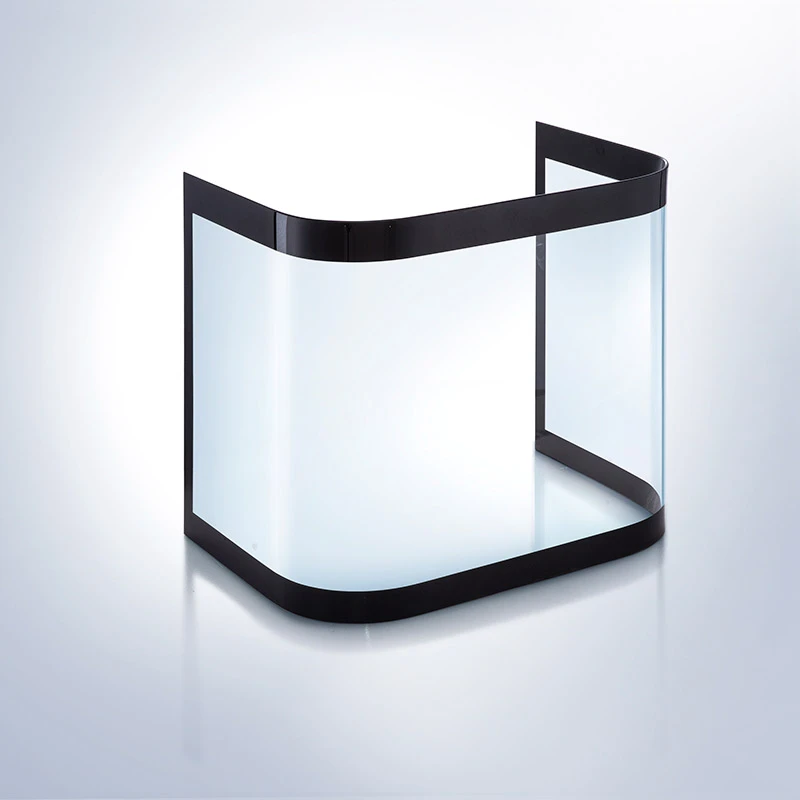
A: Yes. Bent or curved tempered glass can be assembled into IGUs and gas-filled, although the spacer must be profiled to match the curvature.
Q: What is the minimum order quantity for custom argon-filled freezer glass?
A: MOQ depends on dimensions and processing complexity. Huayin Glass Solutions supports sample orders for validation before volume production.
Argon-filled insulated glass is a proven, cost-effective way to improve the energy efficiency and condensation resistance of commercial freezer doors. When paired with Low-E coatings, quality spacers, and robust dual-seal construction, it helps OEMs meet stricter energy regulations and deliver longer-lasting products to end users.
Huayin Glass Solutions, a China-based glass deep-processing factory with 25 years of experience, supplies custom argon-filled IGUs, Low-E freezer glass, and complete freezer glass door assemblies for export markets worldwide. Whether you need a sample for testing or a volume OEM program, our engineering team can help you specify the right glass package.
Further reading: Freezer Glass Products · Commercial Supermarket Freezer Glass · Manufacturing Capabilities
Contact Huayin Glass Solutions today for a quotation on argon-filled insulated glass for your freezer door program.
Add:No. 16 Xingye Road, Beijiao Town Industrial Park, Shunde District, Foshan City, Guangdong Province
PHONE: +86 13509957538
TEL: +86 0757-26131933
Email: huayin_glass@163.com

© 2026 Huayin Glass Solutions All Rights Reserved.


